Watch an aggressive Premier League team in possession and you may notice something that initially looks reckless.
The center-backs are nowhere near their own penalty area. The full-backs have pushed forward, midfielders are occupying the opponent’s half, and sometimes almost every outfield player is positioned beyond the halfway line.
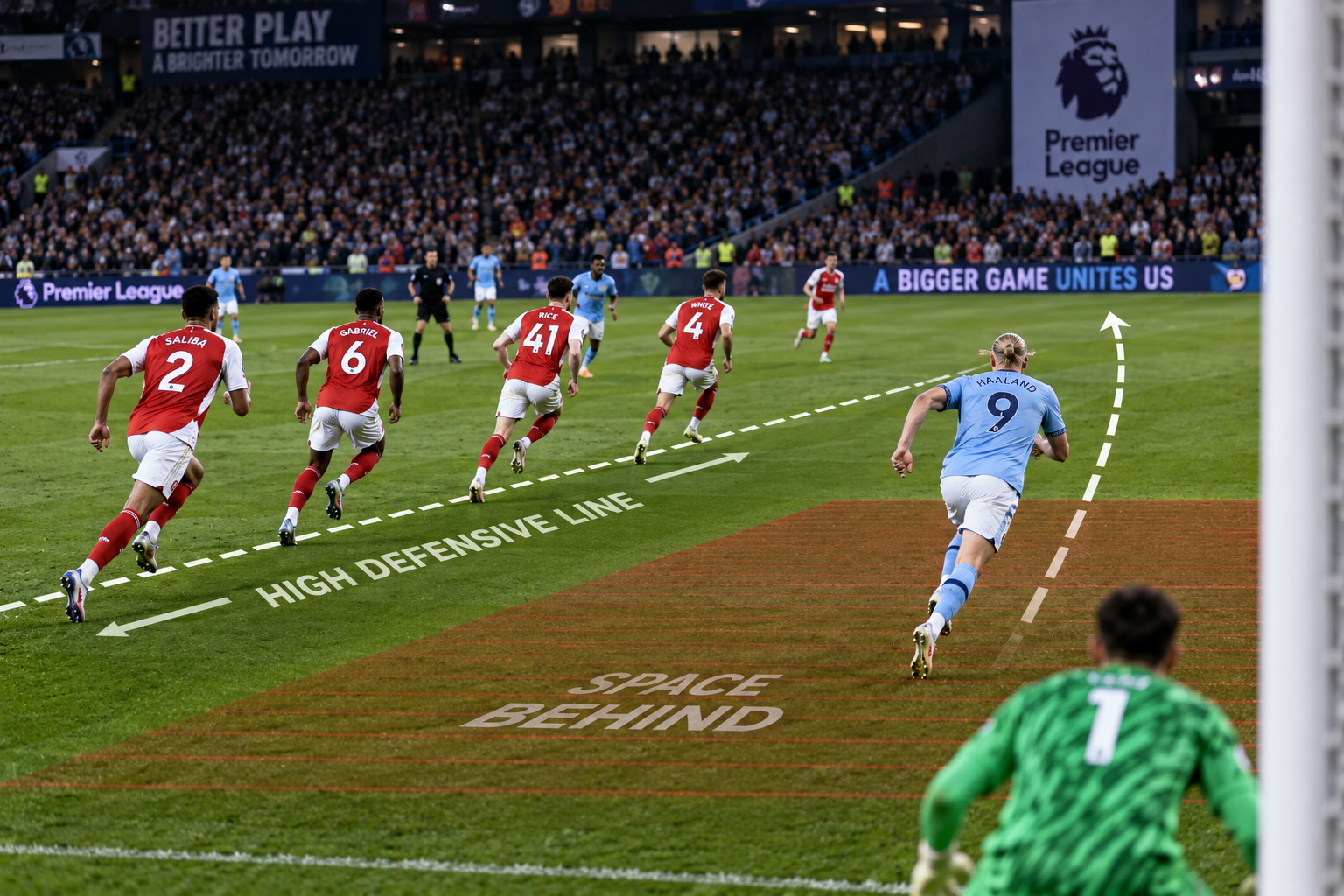
There can be 40 or 50 meters of apparently empty grass behind the defense.
One accurate pass seems capable of sending a fast forward directly toward goal.
So why would a team deliberately create that risk?
Understanding how a high defensive line works requires looking beyond the defenders themselves. The system is designed to compress the pitch, support pressing, recover possession quickly, and make it difficult for opponents to find comfortable space between the lines.
What Is a High Defensive Line?
The defensive line refers primarily to the positioning of the team’s defenders when they are organized without the ball or preparing for a transition.
A high line means those defenders position themselves farther away from their own goal than a deeper defensive block would.
Instead of retreating toward the penalty area whenever possession is lost, they may hold their position or step forward.
This reduces the usable space between defense, midfield, and attack.
The team becomes vertically compact.
That compactness is one of the main reasons the strategy exists.
A High Line Makes the Pitch Smaller
A football pitch does not physically shrink, but teams can change how much of it is useful to the opponent.
Imagine the forwards pressing near the opponent’s penalty area while their own defenders remain 50 meters behind them.
Huge spaces appear between the lines.
An opponent who escapes the first press can receive the ball with time to turn and attack.
Now move the defensive line forward.
The distance between forwards, midfielders, and defenders becomes much smaller. If the opponent receives centrally, pressure can arrive quickly from multiple directions.
The team is defending less space with more players.
Pressing and the Defensive Line Must Work Together
This is why high pressing and high defensive lines are frequently connected.
A forward presses the center-back.
A midfielder closes the nearest passing option.
The defensive line pushes up behind them.
If the opponent plays a short pass into midfield, there should already be another defender or midfielder close enough to challenge.
Without that compact structure, pressing becomes easier to escape.
The first player may sprint toward the ball, but the opponent can simply pass into the enormous space behind them.
A coordinated press is not just running.
It is controlling space.
Why Don’t Strikers Simply Run Behind?
They do.
Runs behind the defensive line are one of the most obvious ways to attack this system.
The problem is timing them.
A forward cannot simply stand 15 meters behind the defenders waiting for a pass because the offside law limits that positioning during the attacking phase.
The striker needs to coordinate the run with the passer.
Move too early and the player may be offside.
Move too late and a defender may recover.
Get the timing right and suddenly that large space behind the defense becomes extremely valuable.
This constant timing battle is central to football played against a high line.
The Offside Rule Becomes a Defensive Tool
Defenders do not merely hope attackers become offside.
Well-organized teams actively use positioning to make forward runs difficult.
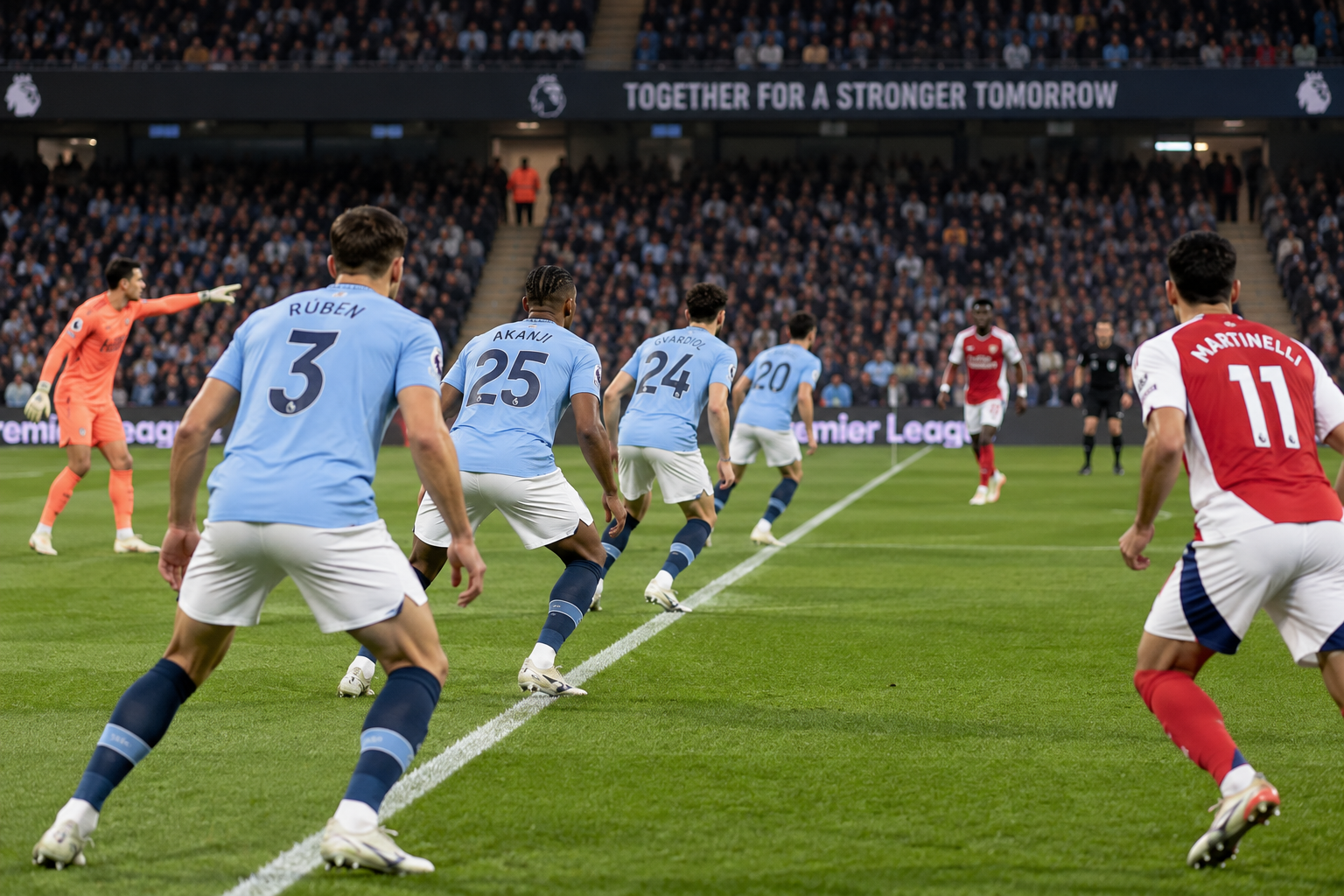
When pressure is applied to the ball, defenders may hold or advance their line rather than automatically retreating.
That forces attackers to keep checking their position.
A fraction of a second can determine whether a run produces a one-on-one opportunity or an assistant referee’s flag.
However, this only works when the defenders move together.
One player remaining deeper can change the entire situation.
One Defender Can Break the Line
Picture four defenders standing almost level.
Three step forward.
One does not.
The attacking forward who would otherwise have been offside may now remain legally positioned because of that deeper defender.
This is why communication and awareness are essential.
Defenders constantly monitor teammates, opponents, the ball carrier, and available space.
The defensive line should behave almost like one connected unit rather than four independent players.
A high line magnifies positioning errors because there is so much space behind it.
Pressure on the Ball Is Crucial
Not every opponent should be allowed the same opportunity to pass behind a high line.
If a midfielder has the ball while being aggressively pressed, playing an accurate 40-meter pass becomes difficult.
If the same midfielder has several seconds to lift their head and choose a target, the situation changes dramatically.
This leads to one of the fundamental principles of high-line defending:
The space behind is safer when the player with the ball does not have time to exploit it.
The defensive line and pressing structure therefore depend on each other.
When pressure disappears, defenders often need to react.
When the Passer Has Time, Defenders May Need to Drop
Holding a high line blindly is not intelligent defending.
Players read cues.
Has the opponent controlled the ball cleanly?
Are they facing forward?
Is there pressure on them?
Do they have the technique and time to play behind?
Are attackers beginning their runs?
If the passer has time and space, defenders may begin dropping earlier to protect the area behind them.
This is where tactical intelligence becomes more important than simply following a predetermined line on the pitch.
The Goalkeeper Becomes Part of the System
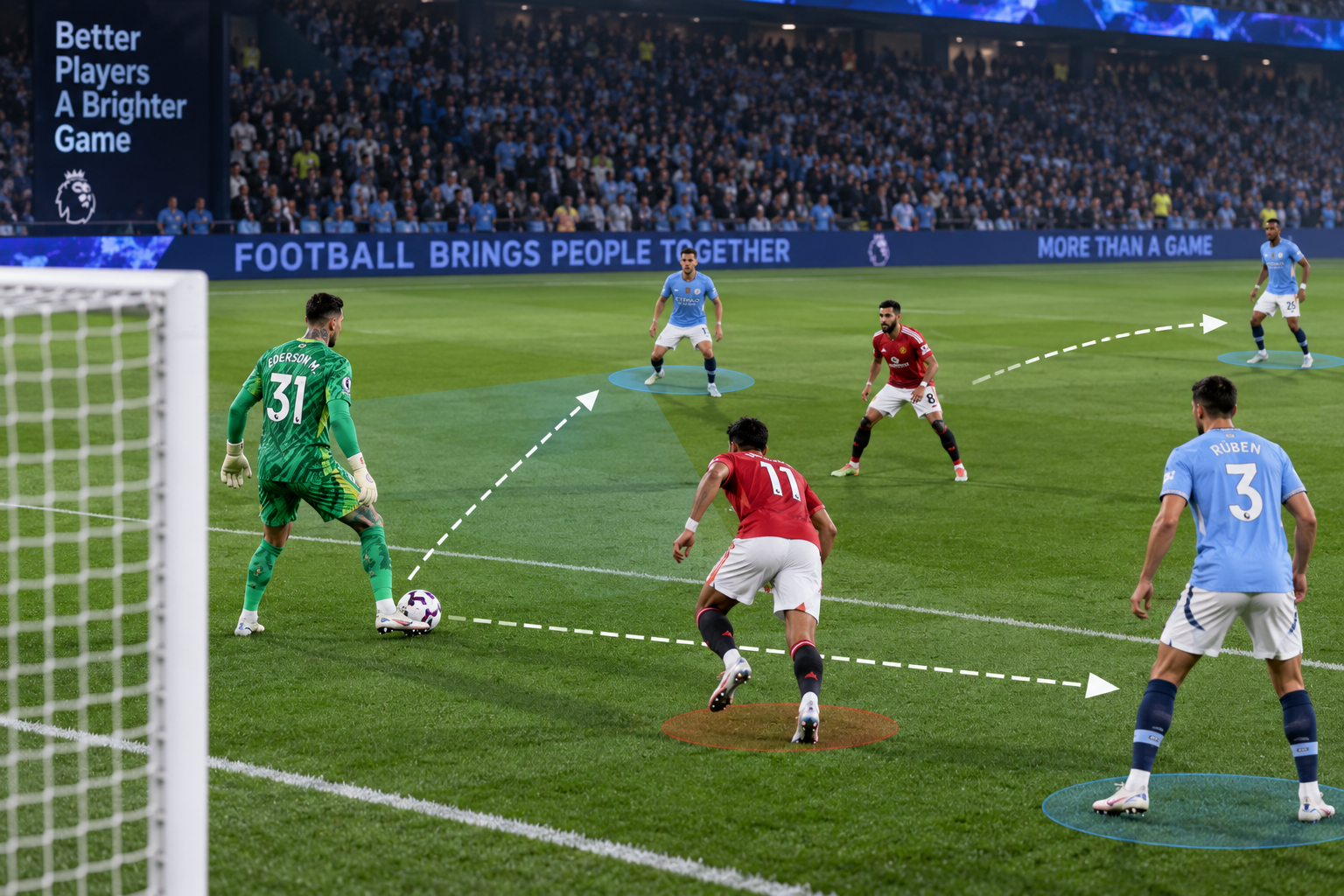
A high defensive line changes the goalkeeper’s job.
If defenders are positioned far from goal, there is a large area between them and the goalkeeper.
Someone needs to protect it.
That is where the idea of the sweeper-keeper becomes important.
When appropriate, the goalkeeper positions higher than a traditional keeper might, ready to leave the penalty area and clear through balls before the attacker reaches them.
The goalkeeper effectively becomes an additional defender behind the high line.
Starting Position Matters for the Goalkeeper
Imagine a through ball traveling into 30 meters of empty space.
A goalkeeper standing directly on the goal line has much farther to travel.
A goalkeeper already positioned higher can potentially reach the ball first.
But positioning too aggressively creates another risk.
If possession turns over unexpectedly and the opponent can shoot from distance, the goalkeeper may be exposed.
So the keeper is constantly adjusting based on where the ball is, how much pressure exists, and where the defensive line is positioned.
Fast Defenders Help, but Speed Is Not Everything
High defensive lines are often associated with quick center-backs.
There is a good reason for that.
If an attacker breaks through, recovery speed can save the situation.
But pace alone does not make someone an effective high-line defender.
Reading the game can prevent the race from happening in the first place.
A defender who recognizes the pass early can turn and move before the striker reaches full speed. Another may intercept the pass instead of chasing the attacker.
Positioning can compensate for situations that raw sprint speed cannot solve.
Body Orientation Makes a Huge Difference
A defender standing completely square to the ball may struggle to turn when a pass goes behind.
A more appropriate body position can allow the player to see both the ball and the attacking movement while preparing to run.
These details happen constantly during matches.
Fans often see the final sprint.
The important action may have occurred one second earlier when the defender adjusted their feet.
Elite defending frequently looks simple because the player prepared for the danger before it became obvious.
The High Line Helps Teams Win Second Balls
Not every long pass behind the defense reaches an attacker.
Under pressure, opponents often clear the ball without perfect accuracy.
A compact team is well positioned to collect the next ball.
The center-backs can challenge aerially.
Midfielders are nearby for the second ball.
Full-backs can squeeze inward.
If possession is recovered immediately, the attacking team may never escape its own half.
This is one reason sustained pressure can feel suffocating.
Even when the opponent clears the first danger, the ball comes straight back.
It Can Keep Opponents Trapped
Suppose a team defends deep after every attack.
Each time possession is lost, everyone retreats 30 meters.
The opponent now has space to leave its defensive third and establish possession.
A high line attempts to prevent that escape.
Defenders move forward as the attack develops, keeping the team close enough to react immediately after losing the ball.
If possession can be recovered within seconds, another attack begins before the opponent reorganizes.
This is closely connected to counter-pressing.
Counter-Pressing Needs Players Nearby
When possession changes, the first few seconds can be chaotic.
The team that just won the ball may not yet have its attacking structure.
That makes immediate pressure valuable.
But counter-pressing is difficult when teammates are spread across the entire pitch.
A high defensive line helps keep players closer together.
When the ball is lost, several players can converge quickly.
The goal is not necessarily to win possession with the first tackle.
Sometimes forcing a rushed backward or sideways pass is enough to stop the counterattack.
Long Balls Are an Obvious Escape Route
If short passing becomes difficult, the opponent can bypass the press entirely.
A center-back or goalkeeper launches the ball forward.
Now the pressing players are behind the play.
This is one reason teams facing aggressive pressure sometimes use direct football.
The pass does not always need to be perfectly controlled by a striker.
Winning territory, forcing a duel, or competing for the second ball can be enough to escape pressure.
High-line teams therefore need defenders comfortable dealing with direct passes.
A Fast Forward Can Change the Risk Calculation
Some attackers are particularly dangerous against high defensive lines.
Their acceleration makes defenders hesitate about stepping too aggressively.
The threat itself creates space.
If defenders drop a few meters earlier to protect against the run, midfield gaps may become larger.
If they hold the line, the forward keeps threatening the space behind.
This creates an interesting tactical trade-off.
Sometimes an attacker influences the match even before receiving the ball simply because defenders are afraid of what might happen if they leave space.
Curved Runs Can Make Offside Traps Harder
Smart forwards rarely run in a perfectly straight line.
They may curve the run to remain onside longer while still accelerating toward the target area.
The attacker watches both the passer and the defensive line.
The defenders are doing the same.
This produces a tiny tactical contest happening away from the ball.
When the pass finally arrives, the replay may show centimeters separating perfect timing from offside.
What looks like a simple sprint often involved several positioning decisions first.
The Opponent Can Attack From Wide Areas
Central through balls are not the only danger.
A winger may receive outside the defensive line and attack the space diagonally.
Full-backs therefore have difficult decisions.
Step forward to compress the pitch?
Stay wider to protect against the winger?
Move inside to support the center-backs?
The correct answer changes depending on where the ball and opponents are positioned.
A high line is a team structure, not merely two center-backs standing near halfway.
Losing the Ball With Poor Structure Is Dangerous
Not every turnover is equal.
If possession is lost while the team has several players behind the ball and good spacing, counter-pressing may be possible.
If possession is lost after both full-backs have advanced, midfielders have moved ahead, and the center-backs are isolated, one pass can create enormous danger.
Teams therefore think about rest defense—the structure maintained behind the attack in case possession is lost.
Good attacking organization already prepares for the next defensive moment.
Rest Defense Protects the High Line
Suppose eight players are involved around the opponent’s penalty area.
The remaining players cannot simply stand somewhere behind them and hope for the best.
They need positions that cover likely counterattacking routes.
A midfielder may remain deeper.
Center-backs may position themselves to control opposing forwards.
Full-backs may take asymmetric positions depending on the attack.
This structure determines whether losing possession leads to immediate recovery or a desperate sprint toward goal.
Why High Lines Sometimes Look Terrible
When the system fails, it fails visibly.
A striker breaks through.
There is nobody between the attacker and goalkeeper.
The defenders are sprinting backward.
The replay shows half a pitch of empty grass.
It looks absurd.
But judging the entire strategy from that moment can be misleading.
Every defensive system concedes certain types of opportunities. A deep block may surrender territory, crosses, shots from distance, and sustained pressure.
A high line accepts space behind in exchange for controlling space elsewhere.
The Risk Is Part of the Strategy
Football tactics are rarely about eliminating all danger.
They are about choosing which risks are acceptable.
A high defensive line says:
We will allow space behind us because we believe our pressure, positioning, offside control, goalkeeper, and recovery ability can protect it.
In return, we gain compactness and make it harder for opponents to build comfortably.
Against some opponents, that trade-off works brilliantly.
Against others, it can become extremely uncomfortable.
Match Context Can Change the Height of the Line
Teams do not necessarily defend at exactly the same height for 90 minutes.
A team leading late in the match may become more conservative.
Fatigue can reduce pressing intensity.
A substitute with extreme pace may force defenders to reconsider their positioning.
A red card changes available coverage.
Weather and pitch conditions can affect passing and movement.
Football tactics are dynamic.
“High line” describes a principle, not a fixed coordinate on the grass.
Fatigue Can Break the Connection Between Press and Defense
A high line requires collective movement.
Late in a match, the forwards may stop pressing with the same intensity.
Midfielders arrive half a second later.
Suddenly, the opponent has more time on the ball.
If defenders continue holding the same aggressive positions while pressure ahead of them disappears, the risk increases.
This is why substitutions and game management matter.
The tactical idea may remain the same, but the players’ ability to execute it changes.
Watching the Defensive Line Changes How You See Football
Most viewers naturally follow the ball.
Try watching the defenders instead for several possessions.
When their team attacks, notice how far they advance.
When an opponent receives the ball facing backward, watch whether the line steps forward.
When the passer turns and gains time, see whether defenders begin dropping.
Watch the goalkeeper’s starting position.
Then observe the attackers trying to time runs between those movements.
Suddenly, a large part of the match becomes visible that was happening outside your normal focus.
Conclusion
Understanding how a high defensive line works starts with recognizing that the strategy is not primarily about making defenders play dangerously far from goal.
It is about controlling space.
By moving the defensive line forward, a team reduces the distance between defense, midfield, and attack. That compactness supports pressing, counter-pressing, second-ball recovery, and sustained possession in the opponent’s half.
The trade-off is obvious: space appears behind the defense.
Protecting that space requires pressure on the ball, coordinated movement, good offside awareness, intelligent positioning, capable recovery defenders, and a goalkeeper prepared to operate beyond the traditional goalkeeping area.
When all of those elements move together, a high line can make the pitch feel incredibly small for the opponent.
When one part breaks, that enormous empty space behind the defenders suddenly looks very, very large.