
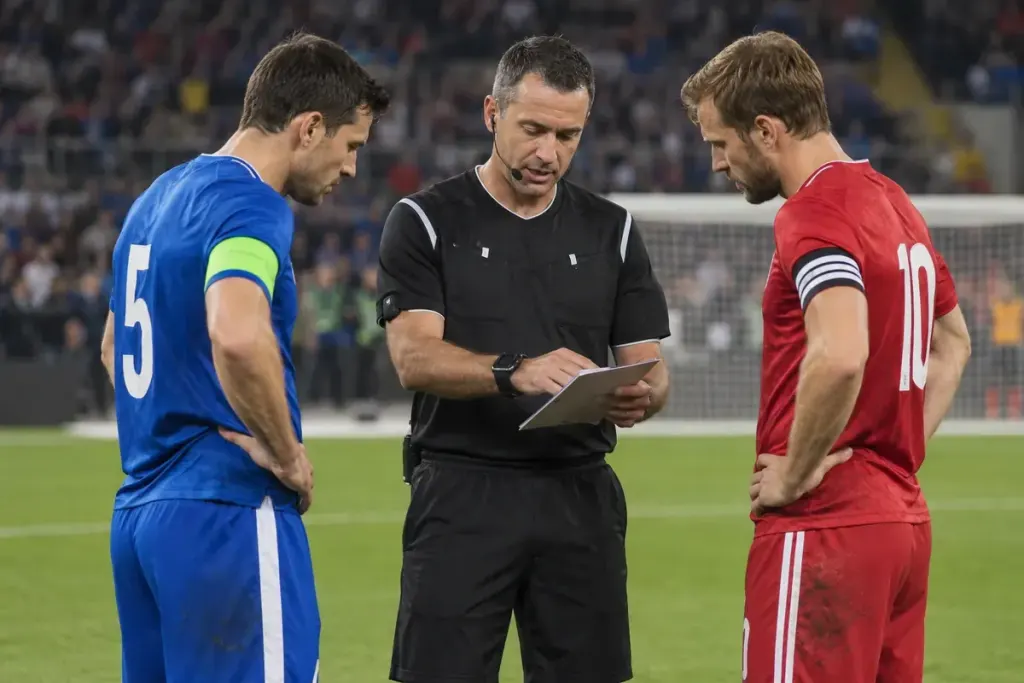
The match finishes with eleven eligible players on one team and ten on the other. Before the shoot-out begins, somebody from the larger group is excluded. This is not another dismissal and does not rewrite the match result. It is part of the shoot-out procedure.
IFAB Law 10 requires the team with more players to reduce its number to match its opponent if the numbers differ at the end of the match and before or during the shoot-out. The referee must be told the name and number of each excluded player.
Keep eligibility separate from the first five
The reduction concerns the eligible group, not merely the five people initially expected to take penalties. Eligible players must take a kick before any player takes a second one. That makes the size of the group relevant if the contest continues beyond the opening rounds.
For a simple example, imagine ten eligible players on each side after the adjustment. The same player cannot take the sixth kick simply because they are the best penalty taker while eligible teammates have not yet kicked. The group must complete its first cycle.
Do not count every person standing near the technical area as eligible. Law 10 sets out who may participate, including specific goalkeeper provisions. A player excluded to equalise numbers is not a spare taker who can casually return when the preferred order changes.
Watch the referee’s procedure
When analysing footage, establish the eligible numbers and any exclusions before discussing tactics. A broadcast may show the discussion without explaining why it happened. The captain speaking to the referee can be dealing with administration rather than disputing a decision.
Use the current laws and the competition’s applicable regulations for the actual match. Goalkeeper replacement and later changes need their own rule checks; the equal-number principle is a starting point, not a shortcut around the rest of the shoot-out procedure.