
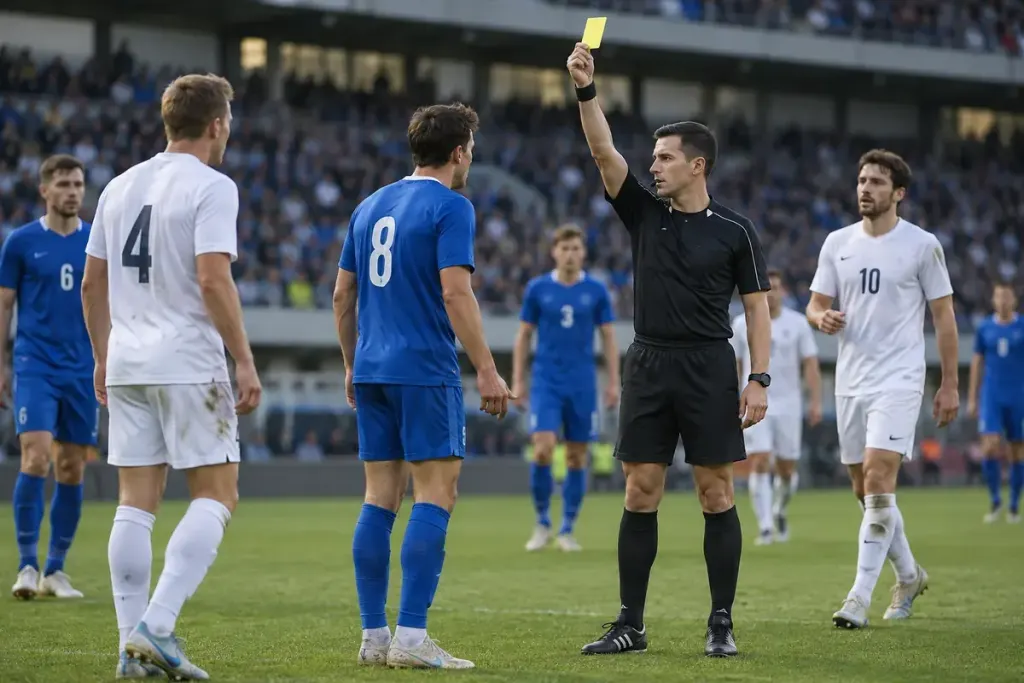
The ball reaches the net, a player removes their shirt, and the referee shows a yellow card. Moments later, the goal is ruled out. The score returns to where it was, but the caution does not necessarily disappear with it.
The IFAB’s Law 12 guidance on goal celebrations explicitly requires a caution for certain celebration offences even if the goal is disallowed. Removing the shirt or covering the head with it is one of those listed actions.
Follow the two decisions separately
In a fictional match sequence, a forward finishes a pass, takes off their shirt and celebrates. An offside offence in the attacking move then causes the goal to be disallowed. The referee has two matters to resolve: whether the goal counts, and whether the player’s later conduct requires disciplinary action.
The offside decision changes the first answer. It does not erase an action that occurred during the celebration. Treating the whole sequence as if it had never happened would miss the distinction the law makes.
The listed celebration offences also include provocative or inflammatory conduct, covering the head or face with a mask or similar item, and certain approaches to spectators or perimeter fencing that create safety or security issues. A commentator’s description of a celebration as “enthusiastic” does not replace the referee’s assessment of what actually happened.
Leaving the field to celebrate is not, by itself, an automatic caution, although players should return promptly. Excessive delay can create its own disciplinary issue. This is why two clips showing players beyond the touchline can lead to different outcomes.
Watch what the card was for
When reviewing an incident, identify the conduct, the timing and the referee’s recorded reason if available. Do not assume the card punished the player merely for thinking they had scored.
The practical viewing habit is simple: keep a score decision and a conduct decision in separate mental columns. A cancelled goal can change the match’s score without undoing everything that followed the shot.