
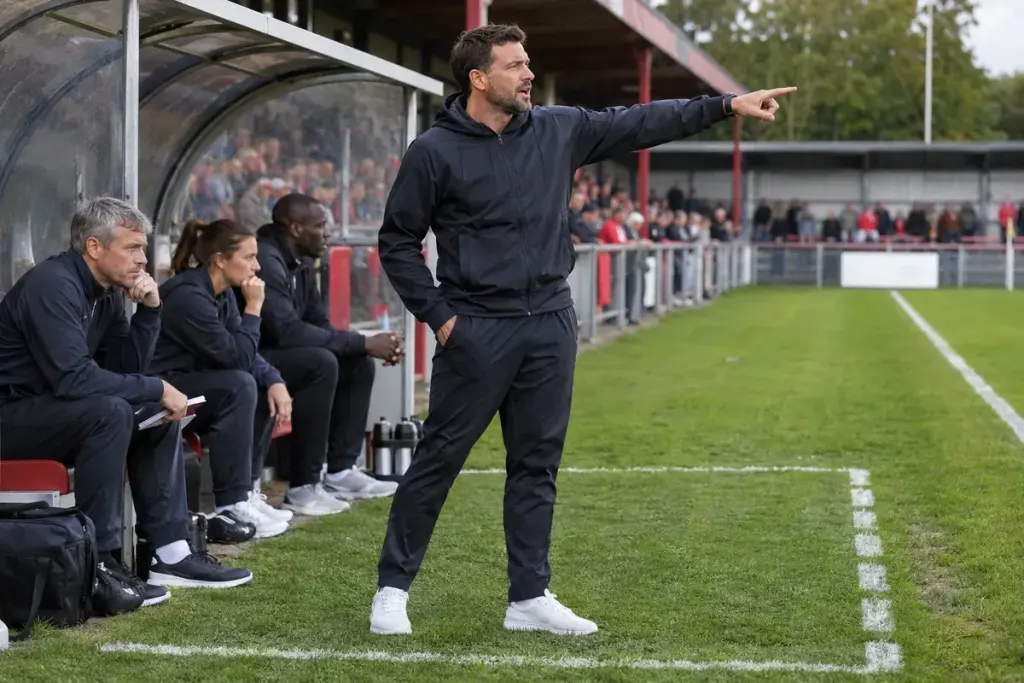
The television camera cuts from the pitch to a crowded bench. One coach is standing near the touchline, another is speaking to a substitute, and several staff members are seated behind them. The technical area accommodates different roles, but it is not an unrestricted second touchline.
IFAB Law 1.9 says that only one person at a time is authorised to convey tactical instructions from the technical area. That is more specific than saying only one person can ever stand or speak anywhere near the bench.
Separate the boundary from the bench list
The Laws describe the marked area in relation to the designated seating and touchline. Competition rules determine how many people may occupy it, and the occupants must be identified before the match under those rules. Counting chairs in a television image is therefore not a reliable way to infer a universal staff limit.
Occupants must behave responsibly and normally remain within the area. Special circumstances can permit departure, such as a medical professional entering the pitch with the referee’s permission. The exception has a purpose; it does not give every member of staff permission to follow.
A small viewing exercise
During a stoppage, watch the bench for a short sequence rather than freezing on one animated gesture. Identify who is directing players, who is preparing a substitute and who is simply communicating with a colleague. Leave uncertain actions unlabelled when the camera or audio cannot establish their purpose.
Then return to the wide view. A coach stepping forward to deliver an instruction and sitting down again is a sequence, not proof that the whole staff is simultaneously coaching from the line.
For an archived match or a local competition, use the applicable edition and competition regulations. The useful distinction is between being an authorised occupant, giving tactical instructions and leaving the area. They are related parts of bench management, but they are not the same permission.