
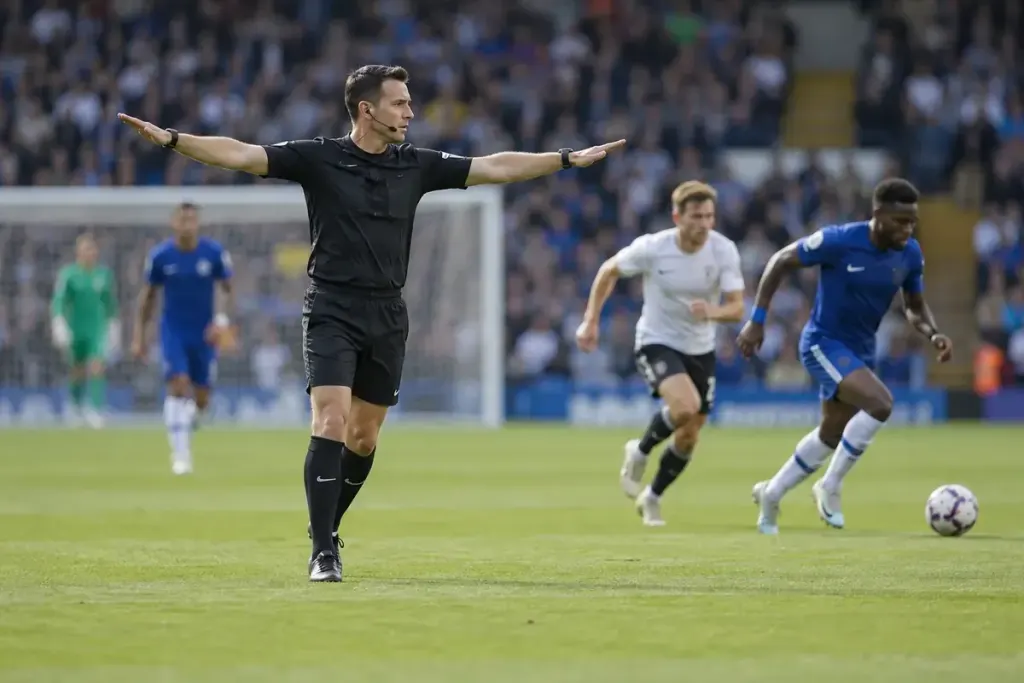
The referee lets an attack continue, then shows a card after the ball goes out. That sequence is not automatically a contradiction. The decision to preserve an advantage and the decision about misconduct answer different questions.
IFAB Law 12 explains when disciplinary action follows at the next stoppage. It also contains exceptions, so “advantage always means a later yellow” is no more reliable than “no whistle means no card”.
Identify the reason for the sanction
A reckless challenge can still require a caution even when the attacking team keeps a useful opportunity. By contrast, when an offence would only have been cautioned for stopping a promising attack, playing advantage removes that particular caution.
The 2026/27 law also distinguishes denial of an obvious goalscoring opportunity. After advantage, the offender is generally cautioned, but not for that reason if the non-offending team scores as a result of the advantage. A separate reckless or serious-foul-play element still needs its own assessment.
Watch the whole sequence
For a viewing exercise, write down three moments: the original contact, the opportunity allowed to develop and the next stoppage. Then ask what conduct the referee is sanctioning. A short clip beginning with the card may omit the challenge that explains it.
Do not use the final score of the move as proof that the original challenge was safe. Equally, do not assume a failed shot necessarily means the referee must return to the earlier foul. The timing and actual advantage matter.
Serious foul play, violent conduct and a second cautionable offence have additional restrictions on applying advantage. Consult the full current law for those situations rather than extending a simple example to every incident.
In a match discussion, “What was the card for?” is often the question that clears up the apparent inconsistency.