
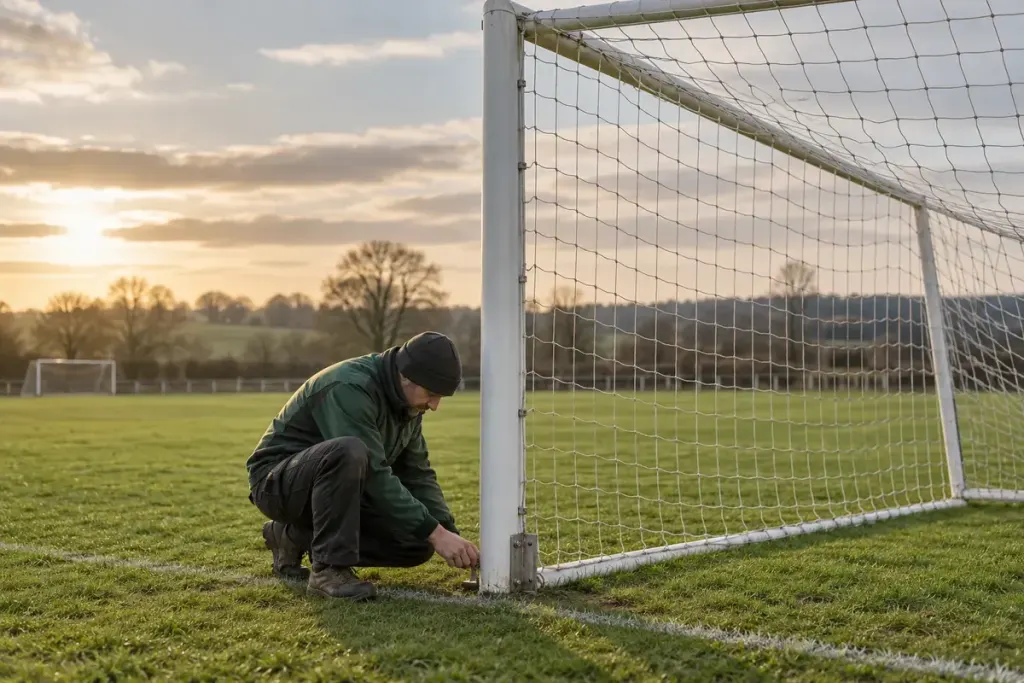
The ball strikes the frame, a fitting gives way, and the crossbar no longer sits where it should. Players may be ready to continue, but willingness is not enough. The goal is part of the required playing equipment, and a damaged frame changes both safety and the conditions of the match.
IFAB Law 1 states that play stops when a crossbar becomes displaced or broken, until it has been repaired or replaced in position. If that cannot be done, the match must be abandoned. A rope is not an acceptable replacement for the crossbar.
Watch the equipment decision before the restart
There are two questions to keep separate while watching the interruption. First, can the goal be restored so the match can safely continue? Second, what restart follows the stoppage? Arguing about the next kick does not answer the first question.
The law provides for a dropped-ball restart if the crossbar can be repaired. That restart follows the applicable dropped-ball procedure; it is not an opportunity for the teams to invent a free kick because one side had possession.
For a viewer, the important sequence is inspection, repair or replacement, confirmation that play can resume, and then the correct restart. A groundskeeper’s work and a referee’s decision are different parts of that sequence.
An abandoned match does not announce its own final result
Suppose a team leads when a goal becomes unusable and no suitable replacement is available. The abandonment itself does not tell you whether the competition will order a replay or make another decision. That outcome belongs to the competition’s regulations and authorities. Wait for their announcement rather than treating the score at the stoppage as automatically final.
At community football, keep spectators and players away from an unstable frame while responsible staff deal with it. Do not hang on the crossbar to test a repair. The most useful match report distinguishes the equipment failure, the referee’s decision and any later competition ruling, instead of compressing them into “the game ended early.”