
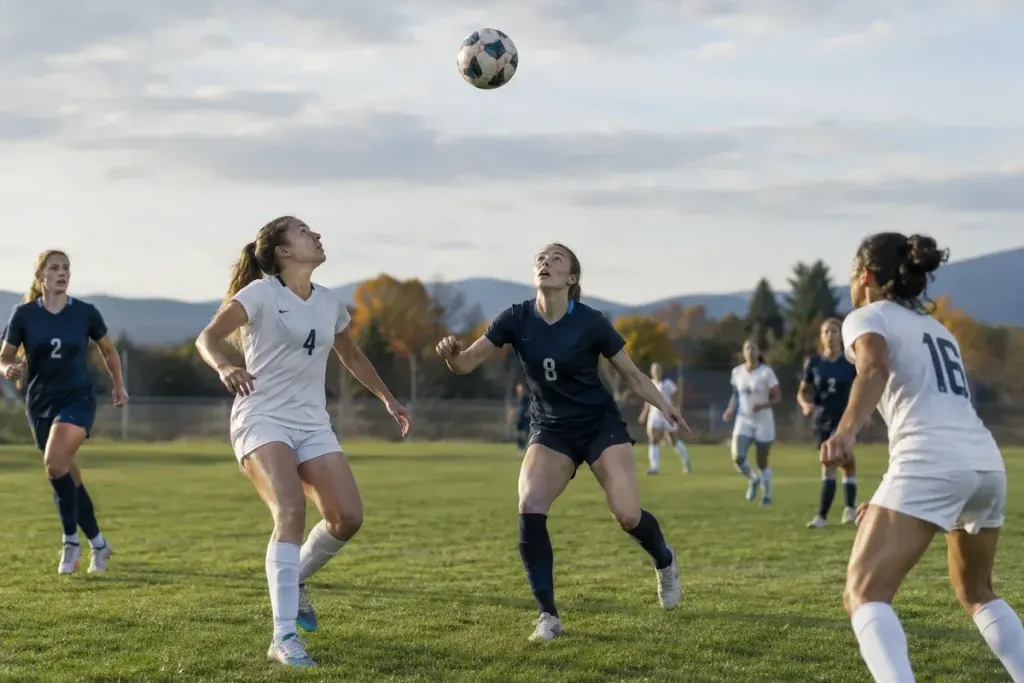
A defender wins a towering header. Ten seconds later, the same team is defending another attack. The header may have solved the first problem while leaving the next one untouched: who was ready for the ball when it landed?
Watch beside the duel
A second ball is the loose ball available after an initial challenge, clearance or other contested contact. It is not restricted to headers. A blocked pass or bouncing clearance can create the same scramble for the next controlled touch.
On a replay, pause just before the long pass arrives. Find the two players contesting it, then look several metres around them. Which midfielders have a view of both the ball and an opponent? Who is already moving toward a likely landing area? Who is standing underneath the duel with nowhere useful to go?
Separate contact from control
The first player to touch the loose ball has not necessarily secured possession. A hurried clearance can give it away again. Look for the next action: a protected first touch, a short pass to support, or a deliberate release into space.
For an informal viewing exercise, follow five long clearances. Note who wins the initial contact, who controls the next ball and whether that team keeps the following pass. These are your own observations, not official match statistics. A tiny sample helps train attention but cannot establish which team is generally superior.
Compact positioning can put teammates near the landing area, while spreading out may offer better passing options if possession is secured. Neither shape is automatically correct; the opponent, pressure and intended next action matter.
The revealing question after a strong header is therefore not simply who jumped highest. It is whether the surrounding players had prepared a useful next possession—or only another emergency clearance.