
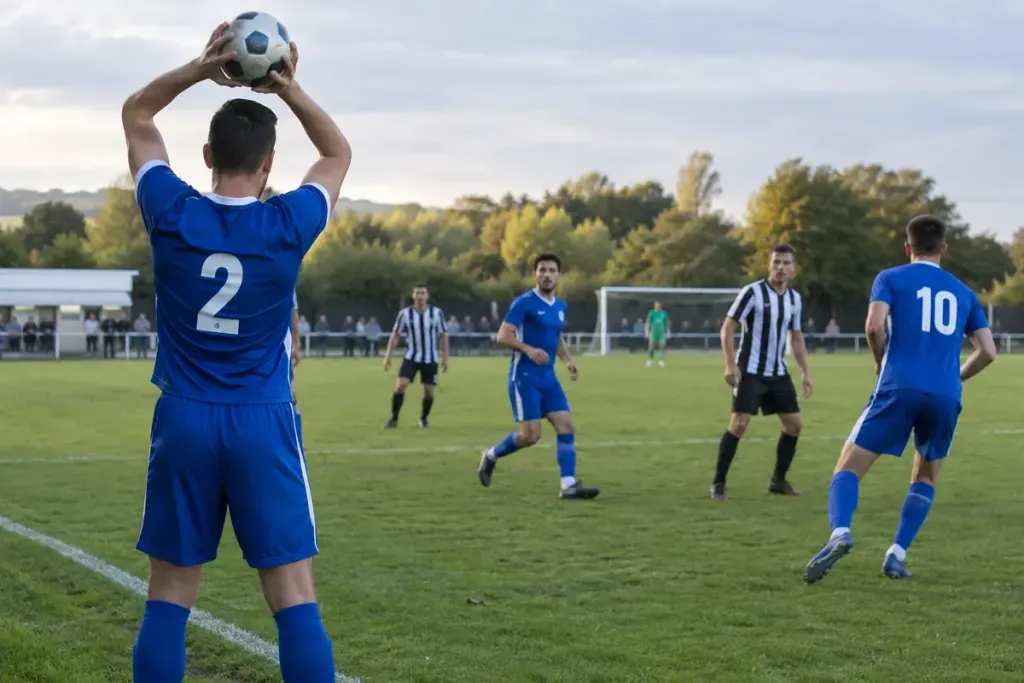
The ball goes out near halfway. The thrower waits, looks twice and eventually sends it down the line into a crowded contest. The throw itself attracts attention, but the more revealing action may be the five seconds before it.
To study a throw-in, follow the available receivers rather than staring only at the ball. The restart needs an option someone can actually use.
Look for movement that changes a defender’s problem
A teammate standing close to the touchline may appear available while being tightly marked. A short movement away and back, a coordinated exchange of positions or a run that takes a marker elsewhere can change the picture.
Do not assume every run is intended to receive the throw. One player may create room for another. Watch the defender’s response and the space left behind before judging whether the movement was useful.
In an illustrative sequence, one receiver moves down the line while a second checks towards the thrower. The value is not simply that both players moved; it is whether the movements produced a distinct passing choice rather than bringing two markers into the same space.
Follow the next touch
After the receiver controls the ball, where can it go? A return option, an inside teammate or a longer outlet can help explain why the first pass was selected. A technically successful throw into a receiver with no continuation may still leave the team under pressure.
Also notice support behind the play. If possession is lost, the team’s arrangement affects how quickly it can respond. The television view may omit that support, so avoid a confident conclusion when the relevant players are off screen.
Compare three restarts
For a short viewing exercise, note the throw location, first receiver and next action on three throw-ins. Did the team play back, turn inside, contest a long ball or lose possession immediately?
This is tactical observation, not a substitute for the competition’s laws or a ruling on a specific restart. It gives you a more useful question than “Why did the thrower wait?”: what options were the surrounding players making possible?