
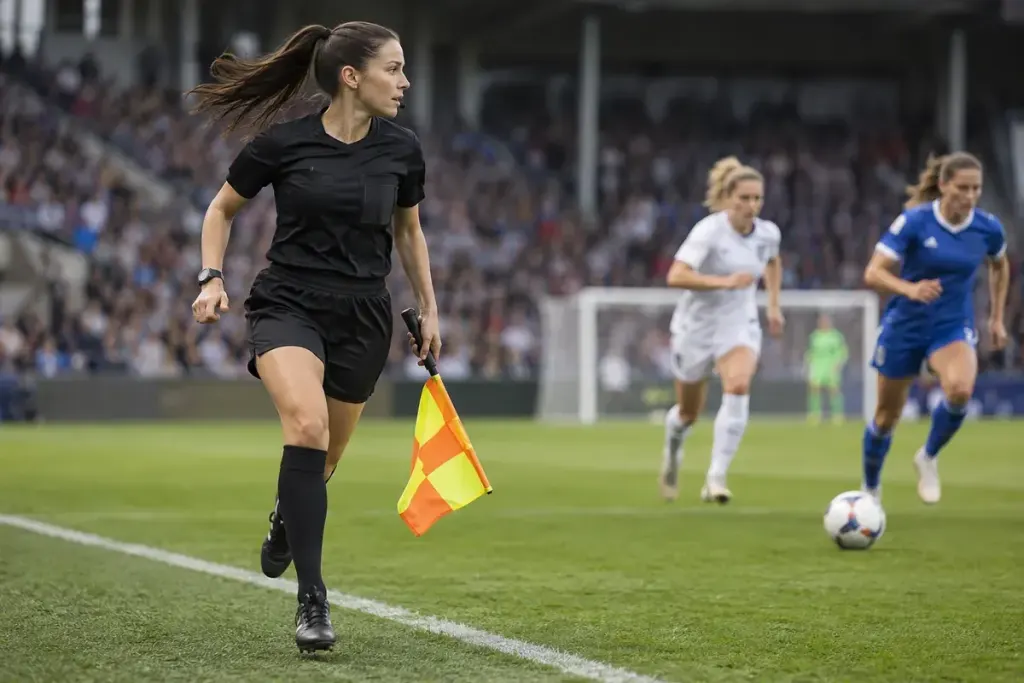
The forward runs through, the assistant keeps the flag down, and only after the shot does the flag rise. From the stands, this can look like hesitation. In a match using VAR, the delay may be part of the officiating procedure.
The IFAB VAR protocol permits delaying a flag or whistle only in a very clear attacking situation, such as a player about to score or having a clear run into or towards the opponents’ penalty area. It is not a general instruction to let every possible infringement continue indefinitely.
Separate the decision from its signal
The officials still have to make an initial decision. A delayed signal does not mean they have handed the whole job to video review or decided that no offence occurred. Allowing a clear attack to reach its immediate outcome preserves an incident that may be checked under the protocol.
For an illustrative sequence, an assistant judges a possible offside offence during a clear run towards goal but delays the flag. The attack produces a goal and the assistant then signals. The eventual outcome depends on the referee’s decision and any relevant VAR check, not on the few seconds for which the flag remained down.
What to watch on the replay
- Identify the attacking situation when the assistant could first have signalled.
- Notice when the flag is raised and when the referee stops play.
- Distinguish the original decision from the outcome of the check or review.
A television graphic may appear after these actions, so it should not be treated as the moment the official first noticed the incident. Broadcast editing can also omit the assistant entirely.
Apply this explanation to the relevant VAR competition and protocol. A local match without VAR does not acquire the same procedures simply because spectators have watched them in a televised league. The governing rules and the officials’ instructions are the starting point.