
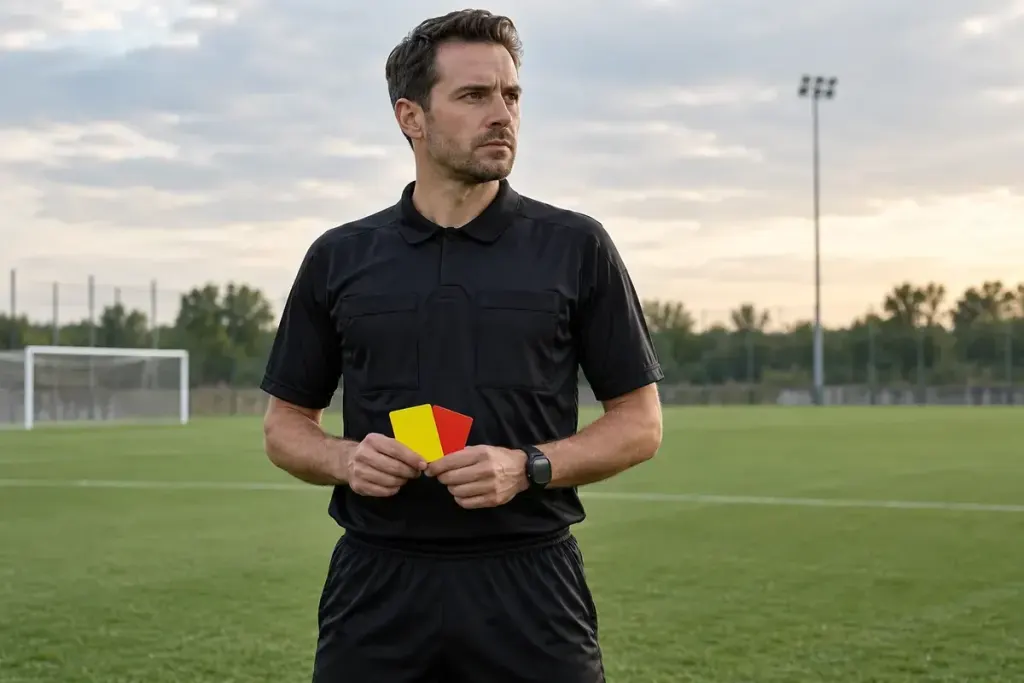
A player leaves the pitch after the referee shows red. That final image does not tell you whether the dismissal followed two cautions or a direct sending-off offence. Watch the sequence and the explanation before comparing it with another match.
Under IFAB Law 12, receiving a second caution in the same match is a sending-off offence. A player can also be sent off directly for a qualifying offence without having received an earlier yellow card. The red card is therefore not always the last step in a two-yellow sequence.
Keep a small timeline
When reviewing an incident, note the minute of the earlier caution, the later incident and the cards shown. An on-screen graphic may update after the referee’s action, while a replay can begin too late to show the first card.
Two separate cautionable offences can occur close together. Equally, one incident involving several descriptions does not automatically mean two cautions. The referee applies the Laws to what happened; viewers should avoid simply counting dramatic moments.
The match decision and the later sanction are separate
A sending-off affects participation in the match. Any subsequent suspension is determined by the competition’s disciplinary regulations and the recorded circumstances. Do not attach one universal number of missed games to every red card, or import a rule from another league without checking it.
For a match note, write the observable sequence first: “already cautioned; another caution shown; then red.” If the official report identifies the offence, add that attribution. If it is not yet clear, leave the reason unresolved rather than converting commentary into confirmation.
This habit also improves discussion of appeals and disciplinary updates. You can distinguish what the referee did on the field from what the competition later decided, and explain why two dismissals that looked similar on television may lead to different records.