
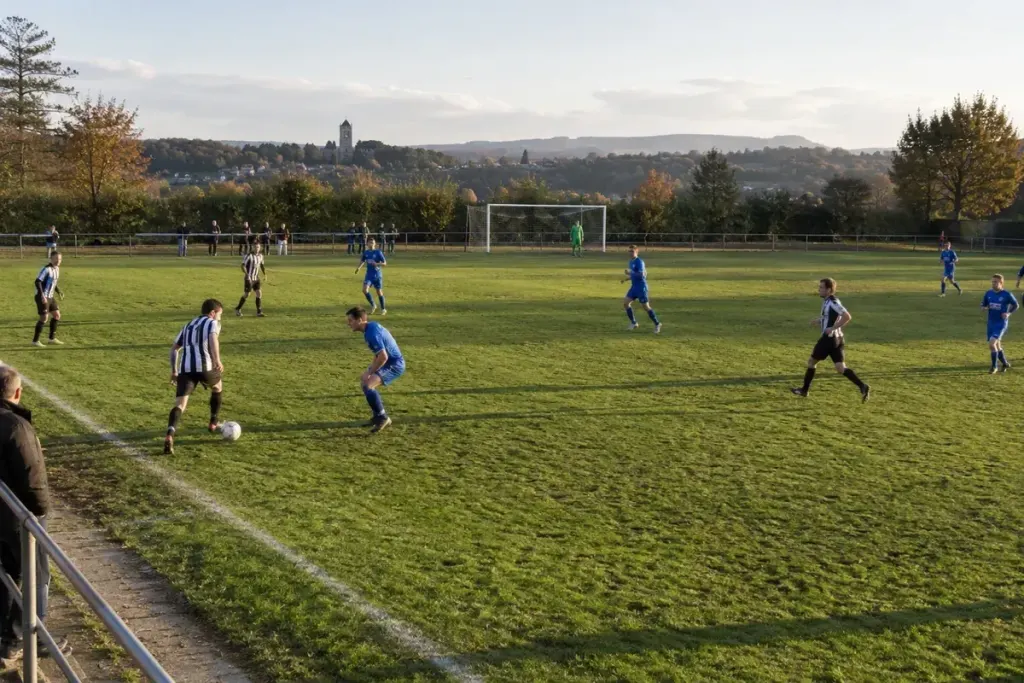
The winger receives the ball and moves towards the centre. Your eyes follow the dribble, but the more revealing movement may be happening behind: the full-back is accelerating into the space the winger has just left.
This is a useful pattern to watch without treating every team as if it follows the same script. Wide players can exchange roles, hold their positions or make a run simply to move a defender. The ball does not have to reach the runner for the movement to matter.
Find who provides the width
When the winger comes inside, look at the touchline. Does the full-back advance outside, does another teammate move there, or does the team deliberately leave the space empty? An outside run can make the opposing defender choose between following the ball and protecting the flank.
Now watch the defender’s body position. If the defender turns towards the overlapping player, the winger may gain a passing or shooting lane inside. If the defender stays narrow, the outside pass may become available. Neither outcome is guaranteed; the timing and supporting players shape the choice.
Notice the run that goes inside instead
A full-back can also run between the winger and the central defenders. That inside route is often called an underlap. It asks a different question of the defence and may create room for a winger who stays wide.
On a replay, pause mentally at the moment before the run. Identify the starting space, the defender who reacts and the passing lane that appears. Avoid judging the whole move only by whether the final cross finds a teammate.
Look behind the attack
When the full-back advances, someone has to consider the space left behind. Watch whether a midfielder drops, the opposite full-back stays deeper or the centre-backs adjust. Losing the ball can expose the cost of the same movement that made the attack promising.
Try following one flank for five minutes of the next match. Count movements that create options, not only completed passes. You will start seeing the winger’s inside touch as one part of a shared decision.