
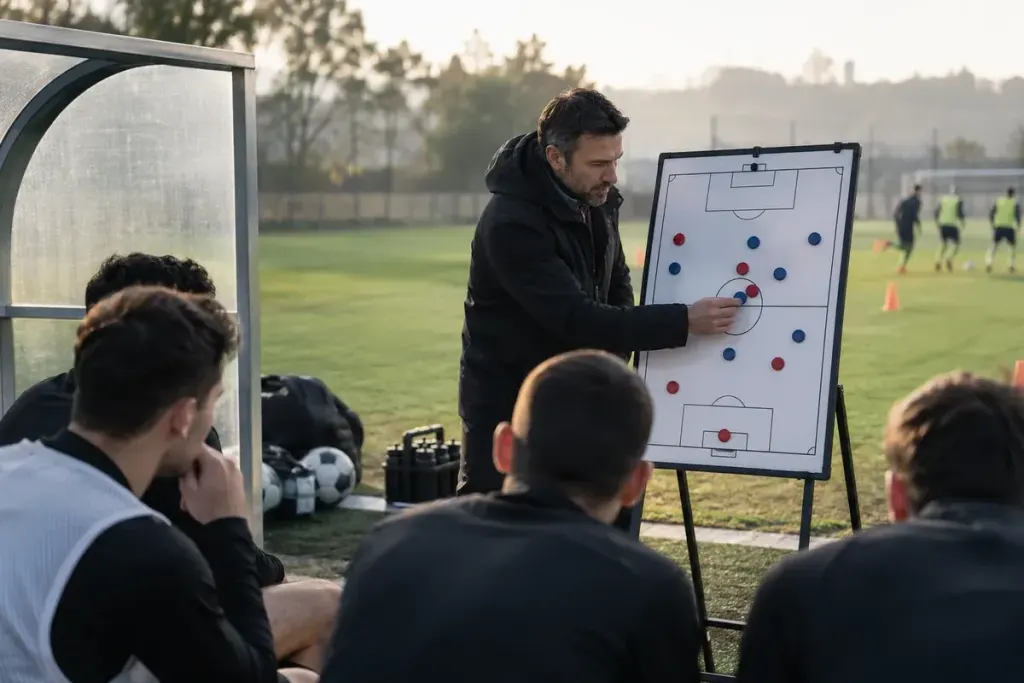
A substitute enters, barely touches the ball and still seems to alter the game. The obvious explanation is fresh energy. Sometimes the more interesting change is where everyone else can now stand.
To watch this properly, pause the habit of judging a substitution only by goals, assists or the first mistake. Look at the team’s shape before and after, and ask which problem the change appears to address.
Choose one phase of play
A team can organise differently with the ball and without it. Compare like with like: two settled possessions, or two periods defending against a controlled opposition build-up. Comparing a corner with a counterattack tells you little about the normal structure.
The FIFA Training Centre’s core principles of play provides a useful vocabulary for observing width, pressure, transitions and movement. These concepts help turn “they look more attacking” into a more precise observation.
Follow the space the new player occupies
Imagine a winger enters and stays close to the touchline. A full-back may now have to defend wider, leaving a different route for a midfielder. The substitute has influenced the choice of pass without receiving it. This is an illustrative pattern, not a claim about any particular match.
Alternatively, an extra midfielder might give a defender a short outlet and allow another player to move higher. Watch whether the same passing option appears repeatedly. One isolated movement may be improvisation rather than a new team instruction.
Notice what the change costs
Adding a player in one area means changing responsibility somewhere else. Who protects the space behind an advancing full-back? Who presses the opposition centre-back? Does a remaining forward now cover a wider area?
Write two short notes: “New option created” and “Responsibility moved.” This keeps the analysis balanced. A substitution can improve one phase while making another less secure, especially when the score encourages greater risk.
Keep the conclusion provisional
The opponent may also change shape, a player may be carrying an injury, and the match state affects both sides. Without the coach’s explanation, describe the visible effect rather than asserting the exact intention.
On the next substitution, watch the first few settled sequences away from the ball. You may learn more from a full-back’s new position than from the substitute’s touch count—and enjoy a part of the match that highlight reels rarely show.