
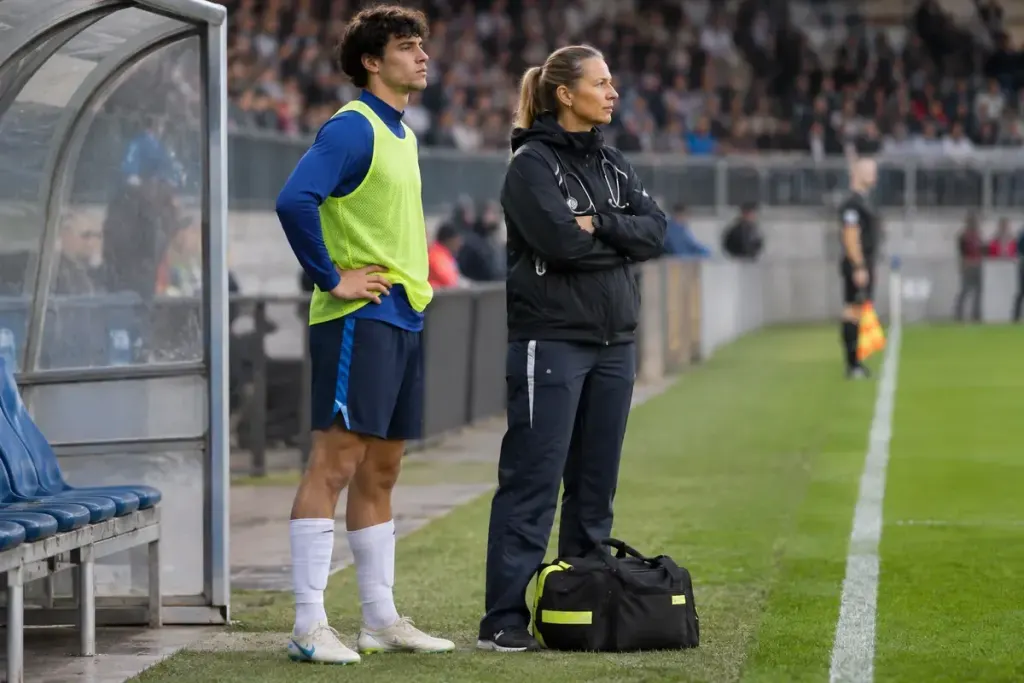
A player leaves after a suspected concussion even though the team has already used its normal substitutions. The change can be legitimate under a separate protocol. The first question for a viewer is whether the competition has adopted that protocol, rather than whether the substitution graphic has reached its usual total.
IFAB’s additional permanent concussion substitution protocol permits competitions to allow one such substitution per team. It does not count against the normal substitution limit or normal opportunities. The replaced player takes no further part in the match, including a penalty shoot-out.
The other team receives an option too
When one team uses a concussion substitute, its opponent gains the option of an additional substitute and an additional opportunity for that change. This helps explain why the match can later show another replacement that appears to exceed the usual allowance.
Imagine Team A makes the concussion substitution and Team B does not immediately respond. The option does not have to be used at that exact moment. A later change by Team B may be connected to it, so a viewer needs the sequence of decisions rather than a single isolated substitution clip.
Watch the opportunity as well as the player count
If a team makes an ordinary substitution at the same time as its concussion substitution, the ordinary change still uses a normal substitution opportunity. The extra route is not a way to bundle unrelated normal changes into an opportunity that no longer exists.
For a match note, record three things: the competition’s rules, which team used the concussion protocol, and whether the opposing team later exercised its corresponding option. These details are more useful than simply counting names on the broadcast.
Medical decisions should not be reconstructed from a replay by spectators. IFAB separates the officials’ administrative role from the team’s decision about an actual or suspected concussion. A player briefly returning after assessment does not, by itself, settle what may be needed later. The rule is designed around a permanent replacement when the protocol is used, not around a viewer’s diagnosis of the incident.