
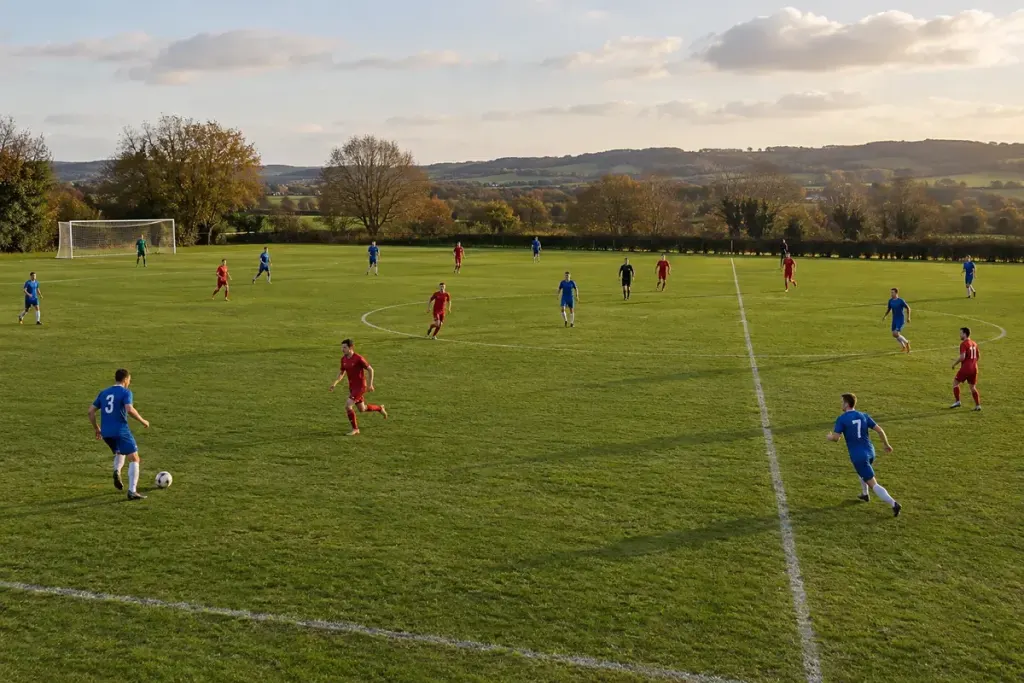
A goalkeeper rolls a goal kick to a nearby defender. The crowd expects a patient passing move, but the defender’s next touch sends the ball long. The short first pass may have been part of the plan rather than a plan abandoned in panic.
Begin with the restart rule
IFAB’s Law 16 states that the ball is in play when it is kicked and clearly moves. It does not have to leave the penalty area first. That permits a nearby teammate to receive inside the area, while opponents must observe the restart’s positioning requirements.
Once play begins, watch which opponent moves towards the first receiver. Their movement may change the space available elsewhere. A short pass can invite pressure, move a marker or give a different player a better angle for the next ball.
Judge the second action on its purpose
A longer pass after a short start is not automatically a failure to build from the back. Ask whether the target was ready, whether teammates were positioned to contest the next ball and whether the pass reached a useful area. A hurried clearance under unexpected pressure is a different sequence from a prepared longer delivery.
For a viewing exercise, follow three goal kicks by the same team. Record the first receiver, the opponent who presses and the direction of the next pass. Add what happened after that pass, rather than stopping your judgement at its length.
Television framing can hide the intended target. If the wide view is unavailable, leave that part of the interpretation open. Do not assume a particular tactical instruction from one isolated restart.
The interesting question is not whether the team is “short” or “long.” It is how the first action changes the options for the next player. Watching the restart as a small sequence gives you a more useful account of a possession that otherwise looks contradictory.