
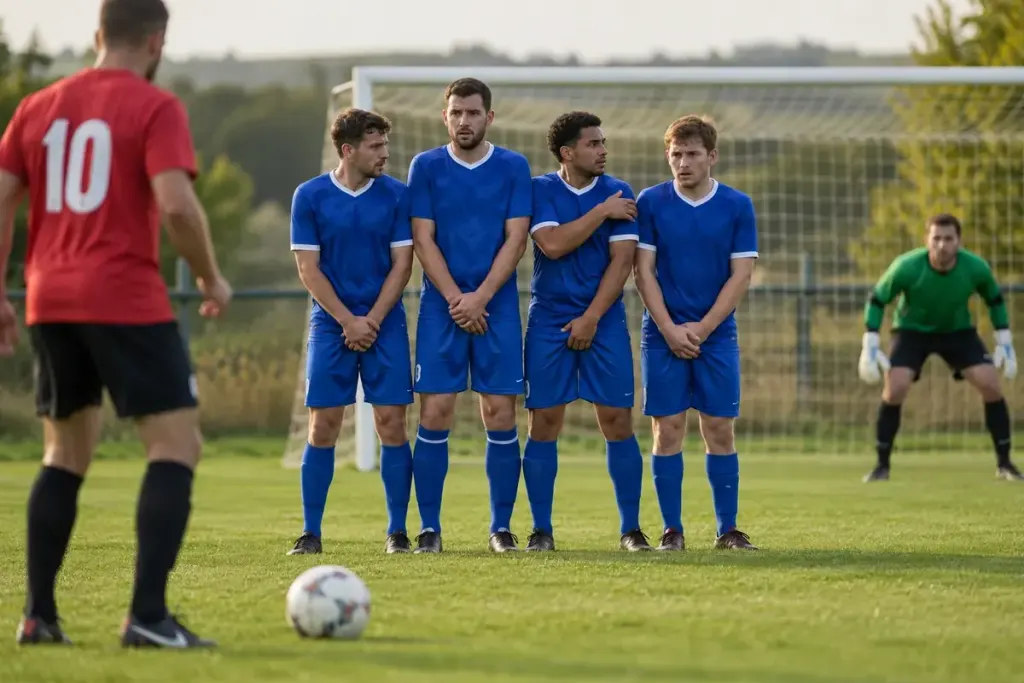
The camera follows the free-kick taker, but the defensive puzzle begins several metres closer to goal. Watch the goalkeeper arranging the wall. That line of players is part of a wider decision about which routes to obstruct and which space the goalkeeper must cover.
Look at the relationship, not just the number of players
A wall can reduce a direct route towards goal, while the goalkeeper positions for the remaining possibilities. The angle of the ball, distance, potential takers and attacking movement all affect the arrangement. More players in the wall does not automatically make the entire situation safer: those players are unavailable for other marking jobs.
For a viewing exercise, pause before the run-up and identify the wall, goalkeeper and unmarked space. Then watch at normal speed. Did the ball travel over, around or through the barrier? Was the next action a shot, a cross or a pass?
The rules shape the available space
IFAB Law 13 sets the normal required distance for opponents at a free kick. It also requires attacking players to stay at least one metre from a wall of three or more defenders until the ball is in play. Those constraints help explain why attackers may wait beside a wall rather than stand directly inside it. Check the rules used in a particular competition where adaptations apply.
Keep watching after the first block
A blocked shot may drop to an attacker. A goalkeeper’s save may create a rebound. Notice which defenders react to that second action and which were watching only the original strike.
Do not judge the whole arrangement solely from whether the kick becomes a goal. An excellent strike can beat a reasonable setup; a poorly organised defence can escape because the attempt misses. Compare the positioning, available routes and subsequent reactions before making a conclusion.
On the next free kick, spend the preparation time watching the defending team. The taker’s technique will still matter, but the wall gives you a way to read the contest before the ball moves.