The Premier League has always produced tension, but certain title races have pushed drama beyond ordinary sporting limits. In these extraordinary finales, an entire season has been decided by one goal, one save, or one breathtaking passage of play.
Supporters have celebrated and suffered at the same time, often in stadiums separated by hundreds of miles. Score updates travelled through the stands, emotions changed within seconds, and players discovered that even months of hard work could be transformed by a single kick of the ball.
No moment captures that chaos more powerfully than Sergio Aguero’s legendary goal in 2012. Yet the story of English football also contains other final-day collapses, desperate comebacks, and near-miracles that deserve to be relived.
Why Premier League Title Deciders Feel Different
A normal league match allows teams to recover from mistakes. A poor result in autumn can be corrected during winter, while dropped points in January may be forgotten after a strong spring.
The final day offers no such comfort.
When the championship remains undecided, every tackle carries the weight of the season. Players must perform while listening to the crowd react to events elsewhere. Managers have to balance tactical discipline with an increasingly desperate need for goals.
That uncertainty makes Premier League title deciders uniquely compelling. The decisive action does not always happen between the two championship contenders. Sometimes a goalkeeper, defender, or relegation-threatened club becomes the unexpected author of the title story.
Manchester United’s Agony at West Ham in 1995
The 1994/95 championship race reached its final afternoon with Blackburn Rovers leading Manchester United by two points. Blackburn travelled to Liverpool, while United faced West Ham United at Upton Park.
The equation was simple. Blackburn needed a victory to guarantee the title. United had to win and hope their rivals dropped points.
Blackburn Open the Door
Alan Shearer gave Blackburn an early lead at Anfield, apparently calming the nerves of Kenny Dalglish’s team. Liverpool responded through John Barnes before Jamie Redknapp scored a late winner.
Blackburn had lost 2–1.
Under ordinary circumstances, that defeat would have been devastating. However, the players could do nothing except wait for news from London.
At Upton Park, West Ham took the lead through Michael Hughes. Brian McClair equalised for United, leaving Alex Ferguson’s side with enough time to score the goal that would make them champions.
Ludek Miklosko Becomes Blackburn’s Unlikely Hero
United launched wave after wave of attacks. Andy Cole received several opportunities, but West Ham goalkeeper Ludek Miklosko produced a remarkable performance.
Every save increased the desperation. United were not facing Blackburn directly, yet Miklosko stood between them and the trophy.
The match ended 1–1. Blackburn’s players had lost at Anfield but still became champions by a single point. It remains one of the strangest dramatic EPL moments because defeat and celebration arrived almost simultaneously.
For Blackburn, the final whistle at Upton Park was more important than the final whistle in their own match.
Arsenal Win the 1997/98 Race Before the Final Day
Not every dramatic title decider waits until the last fixture. Some arrive when a team realises it can end the chase before the pressure reaches its final stage.
Arsenal entered the closing weeks of the 1997/98 season in outstanding form. Arsène Wenger’s side had overturned Manchester United’s advantage with a relentless run built on defensive strength, tactical control, and growing confidence.
Everton Are Swept Aside at Highbury
Arsenal hosted Everton knowing victory would secure the championship. The occasion became a celebration of a team completing one of the great surges in English football history.
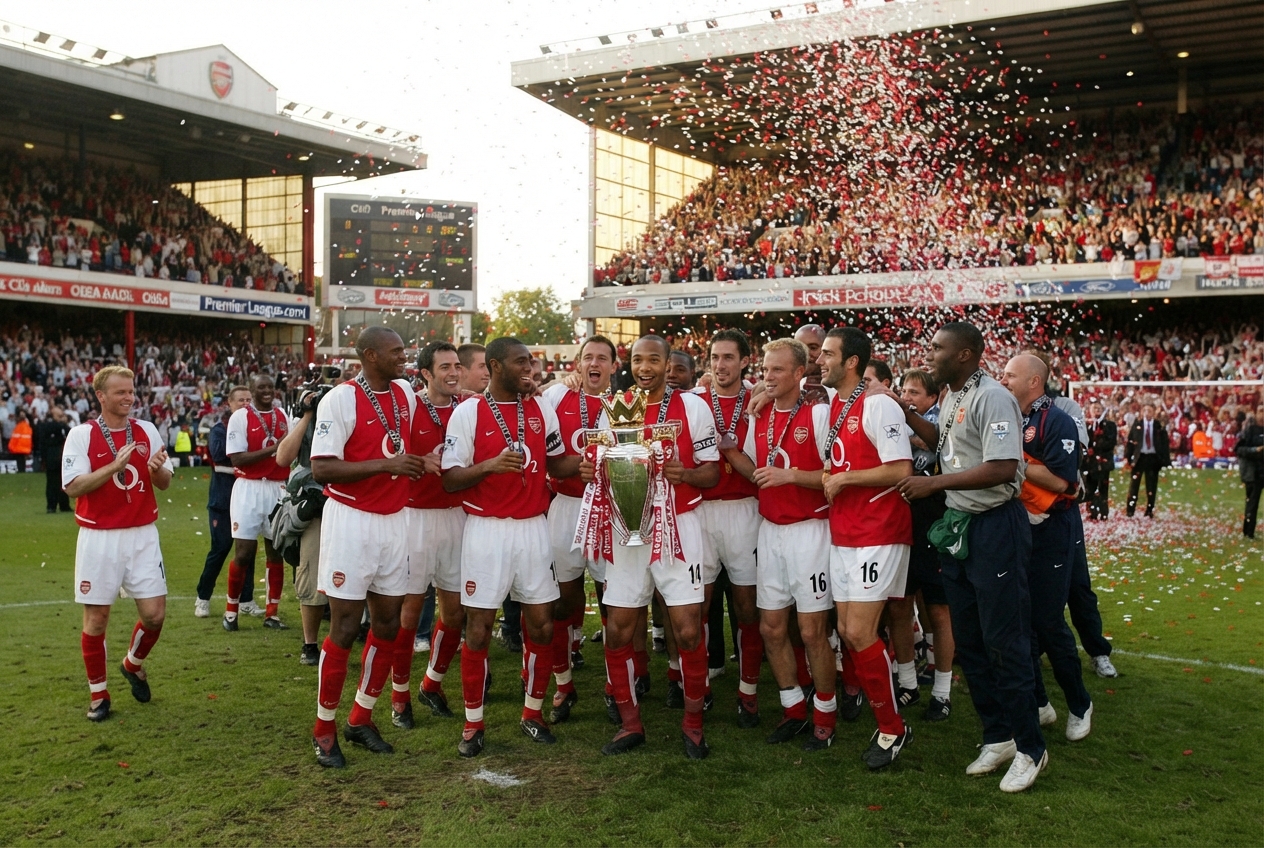
Tony Adams scored the fourth goal in a 4–0 victory, charging forward before finishing with the composure of a striker. The image of the Arsenal captain raising his arms became a symbol of Wenger’s first title-winning team.
It was not a stoppage-time winner, but it belonged to the same tradition of decisive late-season theatre. Arsenal had turned a seemingly comfortable Manchester United lead into an emphatic championship triumph.
Manchester United Survive a Final-Day Scare in 1999
The 1998/99 campaign ended with Manchester United chasing an unprecedented treble. Before the FA Cup and Champions League finals, however, they had to survive one final domestic test against Tottenham Hotspur.
United started the day one point ahead of Arsenal. Victory would guarantee the title, but anything less could allow the defending champions to overtake them.
Tottenham Threaten to Rewrite the Season
Les Ferdinand gave Tottenham the lead at Old Trafford, briefly placing the championship beyond United’s control. Anxiety spread around the stadium as supporters waited for updates from Arsenal’s match against Aston Villa.
David Beckham equalised shortly before half-time with a curling finish. Andy Cole then scored early in the second half, lifting the ball over goalkeeper Ian Walker.
United held on for a 2–1 victory.
The goals did not arrive in stoppage time, but the championship remained vulnerable until the final whistle. The result became the first act of an extraordinary treble completed in Barcelona ten days later.
This finale demonstrated how historic Premier League matches can gain even greater significance from what follows. Had United failed against Tottenham, the mythology of 1999 would have been permanently incomplete.
Aguero 93:20—The Greatest Final-Day Finish
May 13, 2012, produced the most dramatic conclusion the Premier League has ever witnessed.
Manchester City and Manchester United entered the final day level on points. City held the advantage on goal difference and only needed to match United’s result.
United travelled to Sunderland, while City hosted Queens Park Rangers. On paper, Roberto Mancini’s team had the easier assignment. On the pitch, logic disintegrated.
From Control to Catastrophe
Pablo Zabaleta gave City the lead before half-time. The Etihad Stadium relaxed, believing the long wait for a league championship was approaching its end.
Then QPR equalised through Djibril Cissé after Joleon Lescott’s misplaced header. Joey Barton was later sent off, but the ten-man visitors shocked City again when Jamie Mackie headed them into a 2–1 lead.
At Sunderland, United were winning 1–0 through Wayne Rooney. When their match finished, Ferguson’s players stood on the pitch believing they had done enough.
City had entered stoppage time behind.
Edin Dzeko Restores Hope
In the second minute of added time, Edin Dzeko headed David Silva’s corner into the net. The score was 2–2, but a draw was still useless.
City needed one more goal.
What followed lasted only a few seconds. Mario Balotelli received the ball inside the penalty area while falling under pressure. He managed to guide it into Aguero’s path.
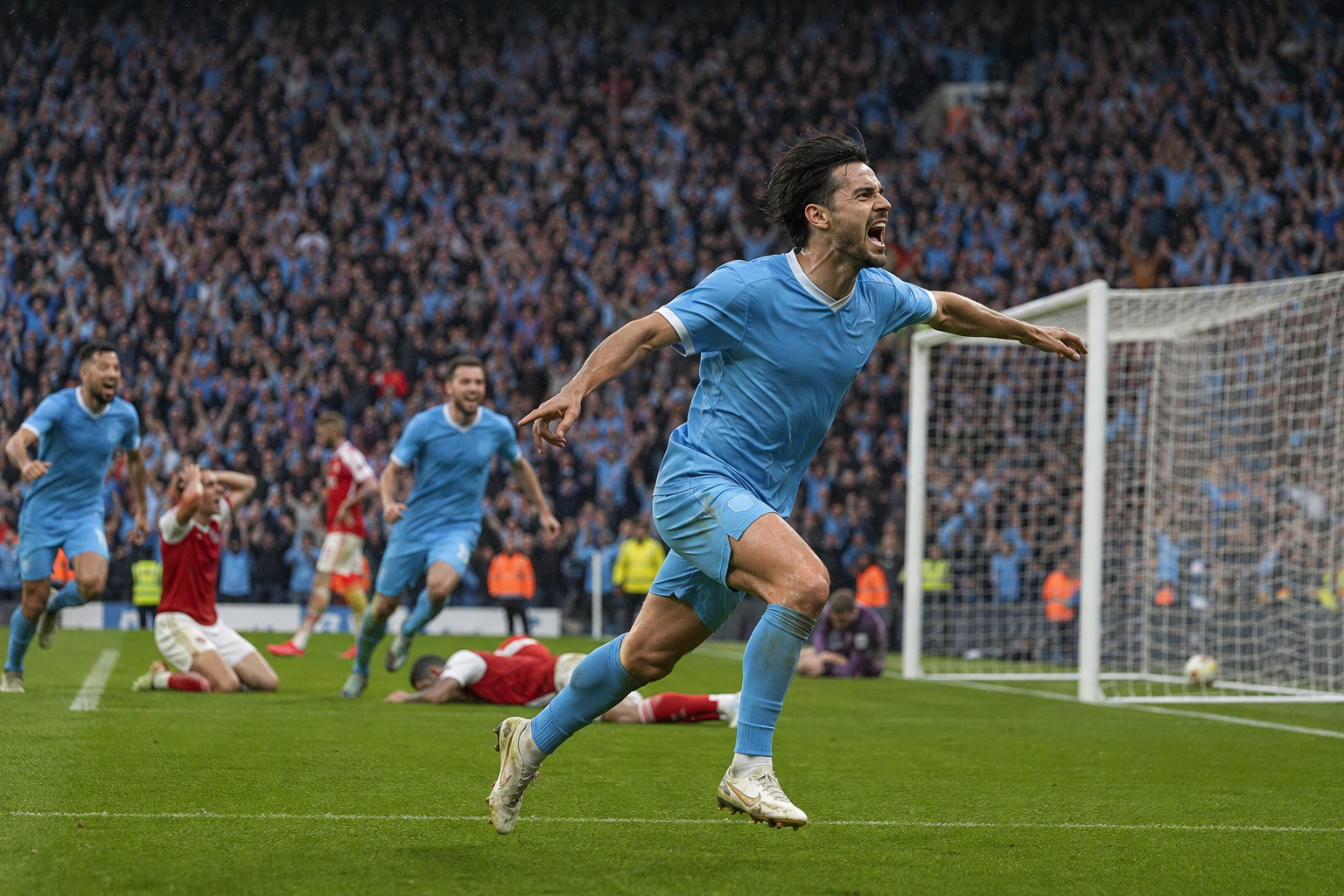
Aguero moved past a defender and struck the ball beyond Paddy Kenny.
The Meaning of 93:20
The stadium exploded. Commentators lost their composure. Supporters invaded the pitch after the final whistle, while United’s players learned at Sunderland that the championship had disappeared.
The clock showed 93 minutes and 20 seconds when the ball crossed the line.
Aguero’s strike was more than a famous goal. It ended Manchester City’s 44-year wait for a top-flight title and confirmed the rise of a new force in English football.
Among all unforgettable EPL title moments, 93:20 remains unmatched because the identity of the champion changed after the rival team had already completed its match.
For a few precious moments, Manchester United were champions. Then Aguero kicked history in another direction.
Liverpool’s False Hope in the 2018/19 Finale
Liverpool’s pursuit of the 2018/19 title created a very different type of final-day drama. Jürgen Klopp’s team had accumulated 94 points before facing Wolverhampton Wanderers, yet Manchester City remained one point ahead.
Liverpool needed to win and hope Brighton could deny Pep Guardiola’s side victory.
Brighton Score and Anfield Erupts
Sadio Mané put Liverpool ahead against Wolves. Then news arrived that Glenn Murray had scored for Brighton against City.
Anfield erupted even though the goal had happened hundreds of miles away. For a brief period, Liverpool occupied first place in the live standings.
The dream lasted only 83 seconds.
Sergio Aguero equalised for City before Aymeric Laporte completed the turnaround. Guardiola’s team eventually won 4–1, while Liverpool defeated Wolves 2–0.
Liverpool finished with 97 points, a total that would have won the league in most seasons. City ended on 98 and retained the trophy.
The afternoon showed that Premier League final-day drama is not limited to late winning goals. Sometimes hope itself becomes the dramatic event—appearing suddenly, spreading through a stadium, and vanishing almost immediately.
Manchester City’s Five-Minute Miracle in 2022
A decade after Aguero’s goal, Manchester City returned to the final day with another title in danger.
City began the afternoon one point ahead of Liverpool. Victory over Aston Villa would secure the championship regardless of Liverpool’s result against Wolves.
Once again, the expected outcome became a nightmare.
Aston Villa Build a Two-Goal Lead
Matty Cash headed Aston Villa in front during the first half. Philippe Coutinho then doubled the advantage in the 69th minute.
City were 2–0 down at home with a championship slipping away. Liverpool were still drawing at Anfield, but one goal could send the trophy to Merseyside.
Guardiola introduced Ilkay Gündogan, a substitution that changed the match.
Three Goals in Five Extraordinary Minutes
Gündogan headed City’s first goal in the 76th minute. Rodri equalised with a controlled low strike two minutes later.
The Etihad sensed another miracle.
In the 81st minute, Kevin De Bruyne drove across the penalty area and delivered the ball toward the far post. Gündogan arrived to score his second goal and complete the comeback.
City had gone from despair to a 3–2 lead in approximately five minutes.
Liverpool eventually defeated Wolves, but City’s comeback meant the result did not matter. The champions finished one point ahead again.
The sequence deserves its place among the greatest last-minute football title races even though the winning goal arrived before stoppage time. The compressed intensity—a two-goal deficit erased by three rapid strikes—felt like an entire season unfolding in fast-forward.
What Makes These Finishes Immortal?
Statistics explain who won the championship, but they cannot fully describe how these afternoons felt.
The greatest title deciders contain several stories at once. One stadium celebrates a goal while another falls silent. Players continue competing without knowing whether their effort is enough. Supporters watch the pitch while also following rumours, radios, and live score updates.
That emotional contradiction is central to Premier League mythology.
Aguero’s 93:20 moment remains the standard because it combined timing, consequence, rivalry, and historical transformation. Yet Miklosko’s saves in 1995, Brighton’s temporary lead in 2019, and Gündogan’s comeback in 2022 reveal different forms of the same drama.
The Final Whistle Never Tells the Whole Story
Championships are built across 38 matches, but memory rarely treats every match equally. It selects the moments when control disappeared and destiny seemed to change possession.
That is why last-day title races remain such a powerful part of football culture. They reduce months of preparation to a few unbearable minutes and turn ordinary actions into permanent symbols.
A goalkeeper’s fingertips can rescue one club while devastating another. A substitute can reverse a two-goal deficit. A striker can receive one final pass, strike the ball, and redefine an era.
In the Premier League, the season is never truly over until the clock stops—and, as Aguero proved, sometimes not even then.