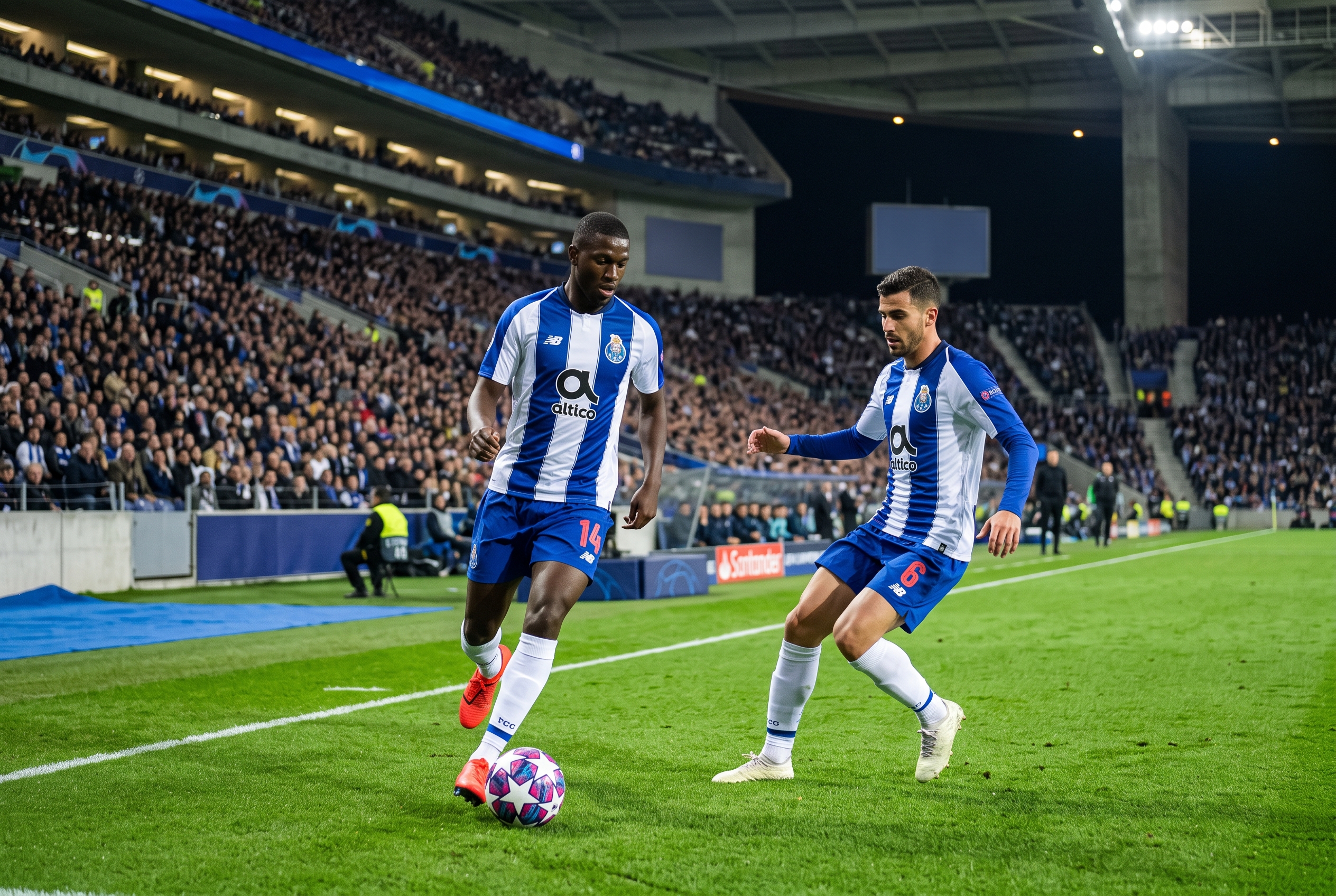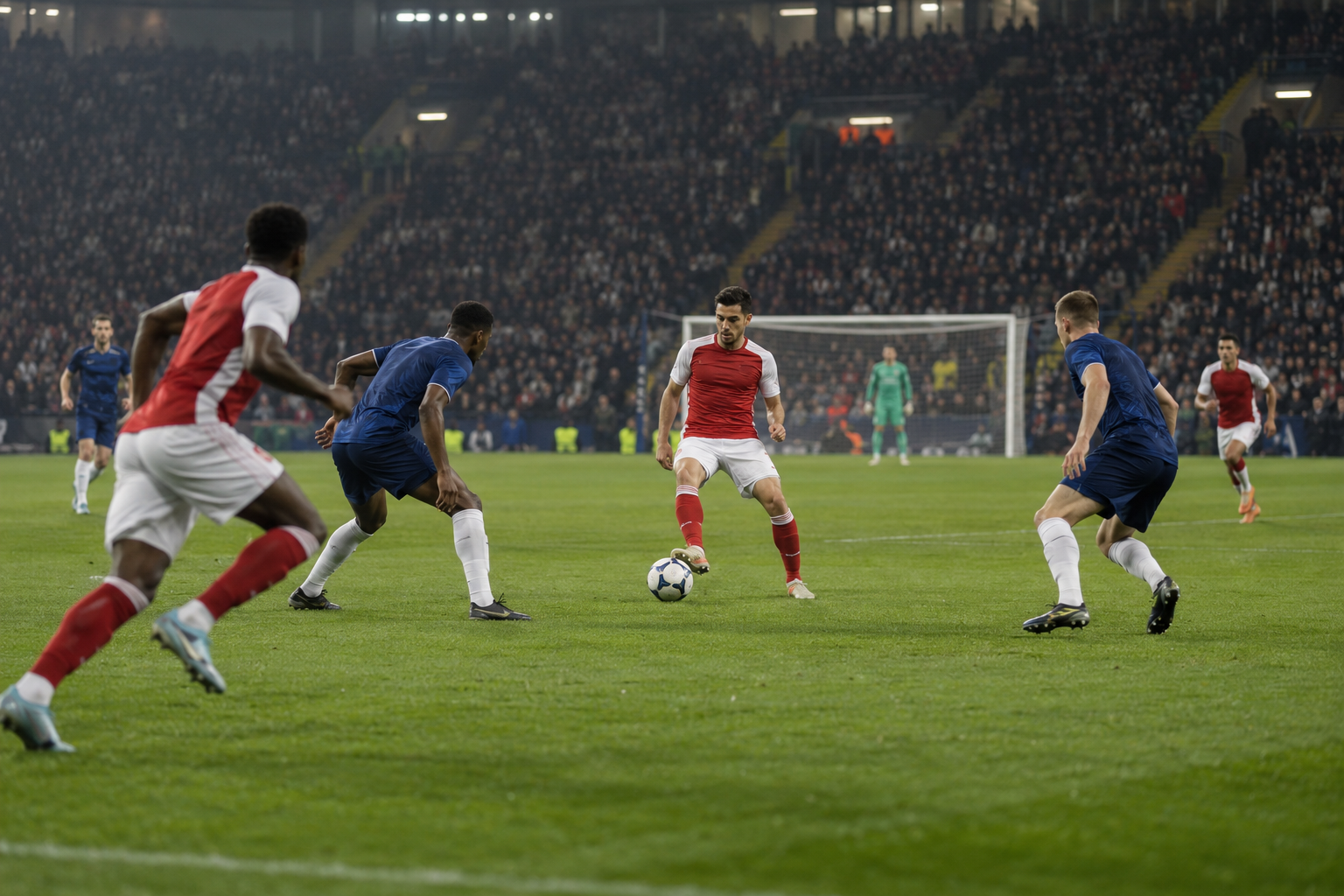
English football once treated the centre-forward as a fixed reference point. The traditional number nine battled centre-backs, attacked crosses, held up direct passes, and occupied the penalty area. His position appeared clearly defined: stay high and score goals.
The false nine challenged that certainty. Instead of waiting beside the defenders, this unconventional forward drops into midfield, creates numerical advantages, and invites opponents to abandon their defensive structure.
The role has become a powerful symbol of tactical change. It reflects how English football moved from rigid positional duties toward fluid systems in which space, movement, and collective intelligence can matter more than a player’s nominal position.
What Is a False Nine?
A false nine starts in the position normally occupied by a centre-forward but does not behave like a conventional striker. Rather than constantly pushing against the defensive line, the player frequently retreats between midfield and attack.
This movement creates a difficult decision for the opposing centre-backs. If they follow, space opens behind them. If they remain in position, the false nine can receive the ball freely and help control the central area.
Understanding false nine tactics therefore begins with understanding manipulation. The player is not simply moving away from goal. Every drop into midfield is designed to disturb defensive references and create a better route toward the penalty area.
More Than a Deep-Lying Forward
A deep-lying forward usually combines creative responsibilities with the physical work expected from a striker. A false nine goes further by temporarily leaving the front line and becoming an additional midfielder.
The distinction is important. The false nine does not merely connect attacks; the player changes the shape of the entire team. Wingers become the highest attackers, midfielders make runs beyond the ball, and defenders are encouraged to step into advanced areas.
The Space Behind the Movement
The most dangerous action often occurs after the false nine has moved away from goal. Wide forwards can then accelerate diagonally into the space between a centre-back and full-back.
A central midfielder may also arrive late in the penalty area. Because defenders are focused on the retreating forward, these secondary runs can be extremely difficult to track.
The Traditional English Number Nine
For decades, English football celebrated powerful centre-forwards. Teams often advanced through direct passes, crosses, second balls, and physical duels. The striker was expected to provide a visible target around whom the attack could function.
This approach produced many outstanding goalscorers and remains effective when used intelligently. However, it also gave defenders relatively familiar reference points. Centre-backs generally knew where their direct opponent would be.
The gradual English football evolution weakened those certainties. Greater international influence, improved playing surfaces, and more technically sophisticated coaching encouraged teams to build attacks through shorter combinations.
The centre-forward was no longer judged only by finishing. Coaches increasingly valued pressing intelligence, positional flexibility, passing quality, and the ability to create space for teammates.
How the False Nine Entered the Premier League Conversation
The concept itself is not a modern invention. Earlier generations of football included forwards who withdrew from the highest attacking line and influenced play from deeper positions.
What changed was the role’s prominence within contemporary positional systems. European tactical ideas became more influential in England, while Premier League clubs recruited coaches and players comfortable with fluid attacking structures.
The false nine became especially attractive against compact defensive units. A traditional striker could become isolated between two centre-backs, but a mobile forward could leave that zone and force the defensive block to respond.
This development transformed modern Premier League strategy. Teams began viewing the central attacking position as a platform for combination play rather than a permanent station for a penalty-box specialist.
Pep Guardiola and the False Nine as a System
Pep Guardiola did not invent the false nine, but he helped turn it into one of the defining tactical ideas of the modern era. His interpretation depends on coordinated positioning across the entire team.
The false nine is not given complete freedom to wander without purpose. The player’s movement is connected to the positions of the wingers, attacking midfielders, full-backs, and holding midfielder.
When the forward drops, another player must threaten the defensive line. When a winger moves inside, a full-back or midfielder may provide width. Every rotation is designed to preserve balance while confusing the opponent.
Creating a Midfield Overload
One of Guardiola’s central principles is gaining numerical superiority near the ball. A false nine can transform a three-player midfield into a temporary four-player unit.
This additional passing option makes it harder for opponents to press effectively. If a defensive midfielder steps forward, a runner may attack the space behind him. If nobody applies pressure, the false nine can turn and progress the attack.
Within Guardiola’s positional play principles, the objective is not possession for its own sake. Ball circulation is used to attract defenders, open passing lanes, and prepare an attack under controlled conditions.
Forcing Centre-Backs Into a Dilemma
A centre-back who follows the false nine into midfield risks breaking the defensive line. That movement can leave a large channel for a winger or attacking midfielder to exploit.
Remaining deep carries a different danger. The false nine may receive between the lines, combine with midfielders, and approach the penalty area without immediate pressure.
The role succeeds because neither defensive response is automatically safe. Guardiola’s teams repeatedly create situations in which opponents must choose between two uncomfortable options.
Rotations Rather Than Fixed Positions
Guardiola has often selected technically gifted midfielders or versatile attackers in the central role. Their value lies in reading pressure, protecting the ball, and understanding when to move.
The identity of the false nine can also change during a match. One player may begin centrally before rotating with a winger or attacking midfielder. This constant exchange prevents defenders from settling into predictable individual battles.
Such flexibility explains why fluid attacking movement has become fundamental to elite football. The formation shown before kickoff matters less than the relationships created once possession begins.
Manchester City and the Strikerless Illusion
At Manchester City, Guardiola demonstrated that a team could dominate without using a conventional striker in every match. On paper, the lineup sometimes appeared to lack a natural centre-forward.
In reality, the goal threat was distributed across several players. Midfielders entered the box, wingers attacked the far post, and the nominal false nine connected the phases of possession.
The system could appear strikerless, but the penalty area was rarely empty at the decisive moment. The difference was timing. Instead of one forward waiting permanently inside the box, multiple players arrived there after the defence had been moved.
Why Midfielders Can Excel in the Role
A midfielder operating as a false nine is often comfortable receiving with opponents nearby. This player can recognize passing angles, execute quick combinations, and help the team escape pressure.
The role also rewards tactical discipline. Dropping too early may remove the team’s depth, while staying too high can eliminate the intended midfield overload. The player must interpret teammates, defenders, and available space simultaneously.
This is why the position requires more than technical quality. It demands exceptional awareness and an understanding of the team’s larger attacking structure.
How the Role Changed Other Positions
The influence of the false nine extends far beyond the central attacker. It changes the responsibilities of almost every player in the attacking unit.
Wingers must provide runs beyond the defence rather than remaining permanently wide. Attacking midfielders need to recognize opportunities to enter the box. Full-backs may supply width or move centrally to support possession.
These relationships have reshaped Premier League tactical systems. A defender can become a midfielder during buildup, a winger can become the main goalscorer, and a central forward can become the team’s creative connector.
Wingers Became Central Goal Threats
When the false nine withdraws, wide attackers gain access to central scoring positions. They can begin outside the opponent’s shape before sprinting diagonally behind the defence.
This movement is particularly dangerous because the winger may approach the centre-back’s blind side. The defender must monitor the ball, the false nine, and the runner at the same time.
As a result, modern wide forwards are often evaluated by their ability to score, not merely create crosses. The false nine contributed significantly to that transformation.
Midfielders Learned to Attack the Box
A withdrawn forward also creates opportunities for late midfield runs. These movements are difficult to follow because they begin outside the defenders’ immediate field of vision.
The timing must be precise. Arriving too soon allows the opposition to establish marking assignments, while arriving too late wastes the opening created by the false nine.
The best teams synchronize these runs with passes into wide areas or combinations around the edge of the box. The attack becomes a sequence of connected movements rather than an isolated piece of individual improvisation.
Pressing From the False Nine Position
The role is equally important without the ball. In many modern systems, the central attacker begins the press and determines where the opponent is allowed to build.
A false nine may curve a pressing run to block a pass into midfield while guiding possession toward one side. Wingers then close the full-backs, and midfielders step forward to compress the available space.
This approach turns pressing into a method of chance creation. Winning possession near the opponent’s penalty area can produce an immediate shooting opportunity before the defence recovers.
The development of high-pressing football has therefore expanded the false nine’s responsibilities. Intelligence, stamina, and defensive positioning can be as important as finishing ability.
Why the False Nine Is Difficult to Defend
Traditional man-marking becomes dangerous against fluid movement. If defenders follow every rotation, the defensive structure can be pulled apart. If they protect their zones too rigidly, attackers may find unpressured pockets between the lines.
Communication is essential. Centre-backs and holding midfielders must decide who takes responsibility when the forward drops. Even a moment of hesitation can create the space required for a decisive combination.
The false nine is particularly effective when supported by fast runners. Without penetration behind the defence, the withdrawn forward may simply make possession easier to contain.
Its effectiveness therefore depends on complementary movement. The role is not a tactical shortcut; it is one component within a coordinated attacking mechanism.
How Opponents Counter the False Nine
Defensive coaches have developed several responses. One option is to instruct a holding midfielder to monitor the false nine while the centre-backs maintain their positions.
This can preserve the back line, but it may leave the opponent short in another midfield zone. Teams can also defend compactly and allow the false nine to receive while blocking forward passing options.
Another solution is aggressive pressing. If the forward receives with his back to goal, defenders and midfielders can converge quickly before the attacking rotations develop.
Some teams use a back three so that one defender can step forward while the other two protect the space behind. However, this approach still requires excellent coordination because quick switches of play can expose the wing-backs.
The Return of the Conventional Striker
The success of the false nine did not make traditional centre-forwards obsolete. Instead, it encouraged them to evolve.
Elite strikers are now expected to combine penalty-box presence with pressing, link play, and intelligent movement. A powerful number nine can pin centre-backs deep, creating room for midfielders between the lines.
Guardiola’s own tactical development illustrates this balance. A manager can value false nine mechanisms while also building around a specialist goalscorer. The underlying principles—space creation, overloads, and coordinated runs—remain relevant in both systems.
This flexibility is central to elite attacking football. The best coaches do not treat the false nine as an ideology that must be used in every match. They select it when its movements can exploit the opponent’s structure.
The False Nine’s Lasting Influence on English Football
The false nine changed how English football interprets attacking positions. It showed that a centre-forward could control midfield, create space, direct pressing, and enable teammates without spending the entire match beside the centre-backs.
Its greatest legacy is not the disappearance of the traditional striker. The deeper change is the expectation that every player must understand multiple zones and contribute to a collective tactical plan.
Premier League attacks are now more fluid, midfielders are more adventurous, and wide players carry greater scoring responsibility. Defensive units, meanwhile, must respond to opponents who constantly exchange positions.
The false nine represents football’s shift from fixed labels toward functional roles. A player’s influence is no longer defined only by where the formation graphic places him. It is defined by the spaces he opens, the decisions he forces, and the advantages his movement creates.
That is how a seemingly simple act—one forward stepping away from goal—helped reshape English football.