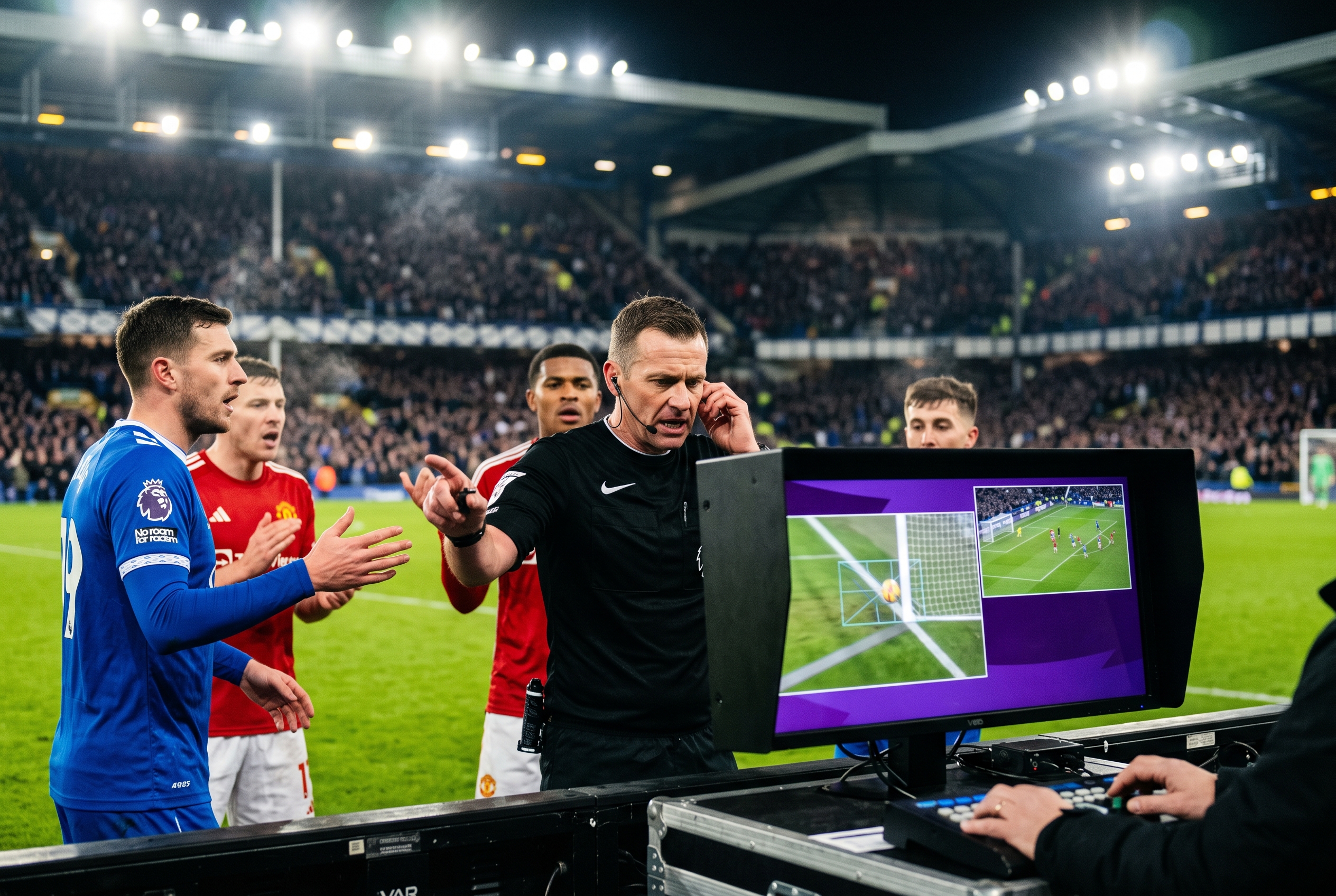
The Impact of VAR on Officiating and Match Outcomes in the EPL
The introduction of the Video Assistant Referee system marked the most dramatic shift in modern English football history. Designed to eliminate clear and obvious errors, the technology was hailed as a revolutionary tool that would bring absolute justice to the pitch. However, several seasons into its implementation, the debate surrounding its overall effectiveness remains as heated as ever among managers, players, and supporters alike.
From controversial handball decisions to millimetric offside calls, video reviews have fundamentally altered how matches are officiated and experienced. While statistical data points to higher overall decision accuracy, the subjective nature of football rules continues to fuel public debate. Analyzing the systemic changes brought by digital review systems reveals a complex dynamic between technological precision and the traditional flow of the game.
The Evolution of Technology in the Premier League
English football spent decades relying entirely on the split-second judgment of on-field officials working in high-pressure stadium environments. Before the digital age, human error was accepted as an inevitable element of the sport, creating legendary moments of debate that lasted for decades. The rapid progression of modern football technology gradually transformed this traditional landscape, starting with simple goal-line monitoring systems before expanding into full video reviews.
Integrating high-definition broadcast cameras and centralized review hubs represented a major shift in how match-critical incidents are handled. Video officials located at Stockley Park analyze multiple camera angles in real time to assist their colleagues on the pitch. This complex infrastructure aimed to modernize Premier League refereeing by providing a safety net for game-defining moments such as red cards, penalty calls, and mistaken identities.
The transition was never going to be entirely smooth given the fast-paced nature of the English game. Unlike sports with natural stoppages, top-tier football relies heavily on momentum and continuous physical action. Adjusting to repeated video interventions required teams and officials to adapt their tactical approaches and emotional responses during matches.
Measuring Decision Accuracy and Match Outcomes
Proponents of video technology consistently point to empirical data showing a measurable increase in correct refereeing calls. Key metrics published by football governing bodies indicate that major decision accuracy has risen significantly since the system was introduced. Assessing the true VAR impact EPL fixtures experience demonstrates that blatant mistakes regarding missed penalties or violent conduct have been dramatically reduced.
One of the clearest areas of objective improvement involves offside decisions along the defensive line. Advanced line-drawing software allows video operators to evaluate tight spatial margins that are virtually impossible for human linesmen to detect at full speed. This precise offside technology in football has undeniably changed match outcomes by awarding valid goals and correctly chalking off illegal strikes that would have previously stood.
However, this extreme precision has altered team tactics across the entire division. Defensive lines now operate with different risk parameters, knowing that late interventions can catch attackers by mere millimeters. Consequently, match strategies have evolved around the certainty of camera coverage rather than relying solely on the positioning of assistant referees.
High-Profile Controversies and Subjective Interpretations
Despite statistical gains in accuracy, video reviews have generated intense scrutiny regarding subjective law enforcement. Unlike offsides, which are binary, decisions involving handball intent or foul severity remain entirely open to human interpretation. These recurring Premier League VAR controversies often stem from the fact that slowing down footage in high definition can make minor physical contact appear far more severe than it felt on the pitch.
The threshold for overturning on-field calls has frequently drawn criticism from pundits and coaching staff. When a referee is advised to review an incident at the pitchside monitor, the original call is overturned in the vast majority of instances. This dynamic has led critics to argue that video assistants are effectively re-refereeing matches rather than simply intervening in clear and obvious errors.
Furthermore, the time required to complete complex reviews directly impacts the tempo of high-stakes encounters. Multi-minute delays while lines are drawn or contact is analyzed can stall momentum and alter the course of a fixture. These stoppages frequently transform the outcome of EPL match decisions, leaving players cooled down and fans in the stadium completely unaware of what is being investigated.
The Psychological Impact on Players and Supporters
Beyond tactical adjustments and statistical charts, technology has fundamentally changed the emotional rhythm of the matchday experience. The visceral thrill of celebrating a goal has been compromised by the immediate fear of a retrospective review. Supporters in stadiums often wait in anxious silence while off-field officials examine subtle movements that occurred long before the ball crossed the line.
For on-field referees, the presence of a digital safety net creates a complex psychological environment. While having a backup system reduces the fear of career-defining blunders, it can also lead to hesitation on the pitch. Modern English top flight officiating requires referees to balance their intuitive authority with the knowledge that every whistle blow will be microscopically scrutinized by global audiences.
Players must also maintain intense focus through extended review pauses without losing their competitive edge. A team celebrating a goal that is subsequently ruled out must rapidly recalibrate its emotional state to avoid immediate defensive vulnerability. Managing these psychological swings has become an essential aspect of elite football management.
Semi-Automated Systems and the Future of Officiating
To address lingering criticisms regarding review speed and subjective ambiguity, football authorities continue to invest in next-generation technology. Semi-automated offside systems utilizing artificial intelligence and tracking chips inside match balls represent the next major evolution. These innovations promise to deliver near-instantaneous offside calls, drastically reducing stadium delays while preserving accuracy.
Automating objective decisions allows human officials to focus their attention entirely on interpreting complex physical fouls and game management. By streamlining technological processes, the league aims to restore the natural flow of matches without sacrificing fairness. The ultimate goal is to establish a seamless harmony where advanced tools support rather than dominate the sport.
As sports technology continues to evolve, finding the ideal balance between human intuition and digital precision remains an ongoing journey. Video review systems have fundamentally reshaped the landscape of English football, providing unprecedented fairness while challenging traditional perceptions of the game. The coming years will determine whether refining these systems can satisfy both the demands of data-driven accuracy and the passionate spirit of the pitch.